
There are many writings that remind us about indigenous practices, rituals that maintained connections with the Earth and with the community.
A few to be mentioned here, and in additional Blogs that follow, include: Tending the Wild, a 2018 article by Charles Eisenstein, writing about a book by that same title, published in 2013 by Kat Anderson. These articles and books reinforce the idea that indigenous peoples engaged with the land and with one another in community and it is those practices that we must return to in order to stand a chance of saving the planet.
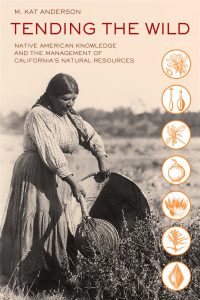
From a review of M. Kat Anderson’s book (https://www.ucpress.edu/book/9780520280434/tending-the-wild):
John Muir was an early proponent of a view we still hold today—that much of California was pristine, untouched wilderness before the arrival of Europeans.
But as this groundbreaking book demonstrates, what Muir was really seeing when he admired the grand vistas of Yosemite and the gold and purple flowers carpeting the Central Valley were the fertile gardens of the Sierra Miwok and Valley Yokuts Indians, modified and made productive by centuries of harvesting, tilling, sowing, pruning, and burning.
Marvelously detailed and beautifully written, Tending the Wild is an unparalleled examination of Native American knowledge and uses of California’s natural resources that reshapes our understanding of native cultures and shows how we might begin to use their knowledge in our own conservation efforts.
M. Kat Anderson presents a wealth of information on native land management practices gleaned in part from interviews and correspondence with Native Americans who recall what their grandparents told them about how and when areas were burned, which plants were eaten and which were used for basketry, and how plants were tended.
The complex picture that emerges from this and other historical source material dispels the hunter-gatherer stereotype long perpetuated in anthropological and historical literature. We come to see California’s indigenous people as active agents of environmental change and stewardship. Tending the Wild persuasively argues that this traditional ecological knowledge is essential if we are to successfully meet the challenge of living sustainably.
Tending the Wild, a 2018 article by Charles Eisenstein, writing about the book by that same title, published in 2013 by Kat Anderson elaborates:
Tending the Wild suggests a different vision, freeing us from the perceptions with which industrial society has imbued us. Instead of zero impact, it suggests positive impact. Instead of leave no trace, it suggests “leave a beautiful trace” or “leave a healing trace.” It suggests that we ask, “What is our proper role and function in service to the health, harmony, and evolution of this whole of which we are a part?”
We have potent gifts of hand and mind that take the form of technology and culture. These gifts are not meant for us alone. They are meant to serve the wholeness and evolution of Life.
References:
Anderson, M. Kat, https://www.ucpress.edu/book/9780520280434/tending-the-wild
Eisenstein, Charles, https://www.kosmosjournal.org/contributor/charles-eisenstein/

