

1. What do I mean by “right balance”?
I do not use the term “right” to convey “right or wrong,” as in moral judgment, but my belief is that there is – within oneself, within a dyad interpersonally, and within all the elements, all the “players” and all the considerations within the whole world – a balance that

9. Power Dynamics in Relationships
In certain kinds of relationships, in which there tends to be power-over/ power-under dynamics, there may be a relationship within which two people do equal work –but one of the members takes over the full leadership role, requiring the other to simply follow. Patriarchy and certain kinds of extreme evangelical
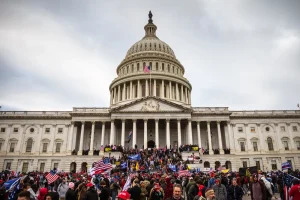
30. “Beyond Trump: The failures that led to the Capitol riots”
An examination of the factors surrounding the January 6, 2021 attack on the U.S. Capitol, looking beyond the actions of Donald Trump to consider the roles of political allies, news and social media, law enforcement, and longer-standing forms of extremism and racial division. The piece presents several perspectives on how these overlapping factors contributed to the events and what they might mean for American democracy.

28. “News” as propaganda
An examination of the close relationship between Fox News and the Trump White House, and the ways media, political power, and business interests can become deeply intertwined. Drawing on Jane Mayer’s reporting, the piece explores the movement of personnel between Fox and the administration, the influence of media narratives on political discourse, and the challenges this creates for the independence of journalism.
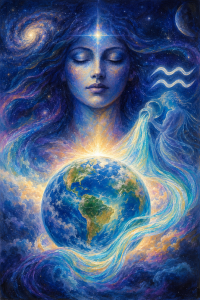
27a. Age of Aquarius, Summary
A summary of the astrological concept of the Age of Aquarius, tracing the symbolic themes associated with successive astrological ages from Leo through Pisces and into Aquarius. The piece explores ideas of individual consciousness, freedom, technology, collaboration, humanitarianism, and the movement from hierarchical systems toward networks and collective participation.

27. Age of Aquarius
A collection of reflections on the astrological symbolism of the Age of Aquarius and the broader transformation it is thought to represent. Drawing on Jennifer McLean and Loraine Van Tuyl, the piece considers themes of spiritual growth, collective change, greater equality, community, and the integration of ego and soul during a time of perceived social and planetary transition.

26. The Descent to Soul
A reflection on the relationship between human maturation, the natural world, and the deeper dimensions of the psyche. Bill Plotkin explores the “Descent to Soul” as a journey of inner transformation that can help people discover their unique place within the web of life, while also considering how individual development is connected to the ecological and cultural challenges facing humanity.
25. Tending the Wild, Charles Eisenstein
A reflection on Indigenous relationships with land and the ways California Native communities intentionally tended and shaped ecosystems over generations. Drawing on Kat Anderson’s Tending the Wild, Charles Eisenstein explores a different understanding of stewardship, one based not on leaving nature untouched, but on developing intimate, reciprocal relationships with the living world and learning how to participate in its regeneration.
24. Global Challenges Are Directing Us Toward a Unity of Purpose
An exploration of how global crises, social division, and collective uncertainty can become catalysts for greater cooperation and unity. The authors consider the movement from separation and hierarchy toward wholeness, ethical responsibility, deeper listening, and a shared sense of purpose across differences.
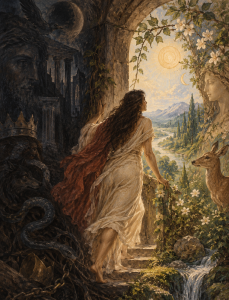
23. Dismantling the Patriarchy Within
Anne Baring and Faranak Mirjalili explore how patriarchal patterns can be carried not only through social structures but also within the individual psyche. Drawing on Jungian psychology, dreams, the feminine and masculine principles, and the recovery of instinct and creativity, they consider how inner transformation may contribute to changing wider patterns of domination and disconnection. The conversation also connects these themes with relationships to the natural world, animal life, and the ecological challenges of our time.

32. The Story of Ishmael
(suggestion from Bridget Birdsall) If you haven’t read a book called ISHMAEL—the protagonist is a gorilla who may have some answers to your question. It’s been around for a while but is so darn timely, and a well-written good read to reflect upon…because in awareness of the problem, just like

13. How and Why Did We First Lose “Right Balance” with Mother Earth?
A reflection on how humanity may have lost its intimate relationship with the Earth and with one another. Drawing on Indigenous teachings, Goddess cultures, and Marija Gimbutas’s interpretation of prehistoric Europe, the piece considers the relationship between connection, reciprocity, patriarchy, exploitation, and our growing separation from the natural world. It ultimately asks what we can learn from older ways of relating to Earth and each other as we face today’s climate crisis.

10a. Giving Better Back
A practical approach to responding differently when conflict arises in an intimate relationship. Drawing from Mona Barbera’s Bring Yourself to Love and Internal Family Systems, “Giving Better Back” encourages us to meet criticism, agitation, judgment, or distance with greater curiosity, calm, compassion, clarity, and connection. Rather than trying to change our partner, the practice invites us to take responsibility for our own responses and create new patterns of relating.
22l. Indigenous Ways of Working with Sacred Medicine
A panel discussion exploring Indigenous approaches to sacred medicine, healing, spirituality, and psychology. Leslie Gray, Kevon Simpson, Belinda Eriacho, and Kelly Yi discuss Indigenous worldviews, traditional healing practices, sacred plant medicines, cultural context, and the importance of bringing these perspectives into contemporary approaches to healing with respect and cultural awareness.
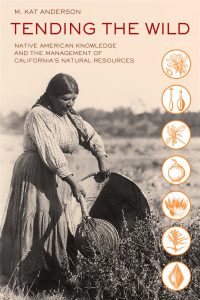
22k. Kat Anderson – Tending the Wild
A reflection on Indigenous relationships with land, community, and the living world, drawing on M. Kat Anderson’s Tending the Wild. The book documents how California Native communities actively tended landscapes through practices such as harvesting, sowing, pruning, and controlled burning, challenging the idea of untouched wilderness and offering a different understanding of stewardship and reciprocity.
22j. Chumash Story on “The People of the Heart”
A Chumash story about the “People of the Mind” and the “People of the Heart,” offering a powerful reflection on humanity’s relationship with the Earth. The story calls on us to awaken the wisdom, spirit, and compassion within our hearts so that we can help restore balance and protect the living world.
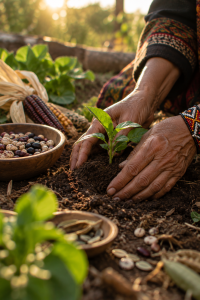
22i. Seeds of Life with Grandmother Jyoti Ma
A webinar exploring the wisdom of seeds, both the physical seeds that sustain future generations and the inner seeds of growth within each of us. Grandmother Jyoti Ma and other elders share teachings on heirloom seeds, Indigenous wisdom, reciprocity, sacred relationship with Earth, and nurturing the conditions for healing, unity, and a more collaborative way of living.
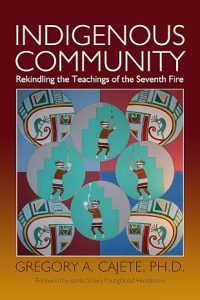
22h. Indigenous Teachings
A collection of books exploring Indigenous knowledge, community, ecological wisdom, and ways of living in reciprocal relationship with the natural world.
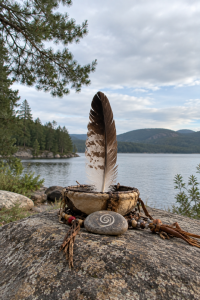
22g. Turtle Island: A Message from White Eagle During the Corona Crisis
This message from White Eagle, attributed to a Hopi Indigenous perspective, reflects on the COVID-19 crisis as a time of uncertainty, reflection, and transformation. It invites us to care for ourselves and others, reconnect with spiritual practice and community, and draw on Indigenous traditions of resilience, ritual, art, joy, and connection to move through difficult times with greater clarity and purpose.
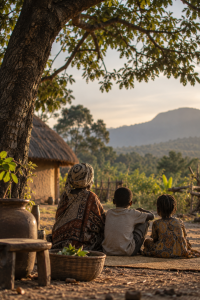
22f. The Wisdom of Our Ancestors
David Korten draws on wisdom traditions from Africa, the Andes, Asia, and other cultures to explore a worldview grounded in interdependence, community, and care for the Earth. Through principles such as ubuntu and buen vivir, he examines how our ideas about purpose, power, economics, community, and education might shift toward greater wellbeing for people and the living world.
22d. An Interview with Francis Weller: Initiation, Trauma and Ritual
In this conversation, Francis Weller and Alnoor Ladha explore the relationship between trauma, initiation, ritual, and community. Weller reflects on how traditional and Indigenous cultures have used communal practices to hold grief and major life transitions, contrasting these with the isolation and individualism of modern culture. The dialogue considers belonging, soul, sacred relationship, and the need to restore community, ritual, and reciprocity in times of profound change.

22c. Francis Weller: Soul, Ritual, Nature and Community
Francis Weller’s work brings together psychotherapy, mythology, Indigenous wisdom, poetry, ritual, and the natural world. Through his soul-centered approach, he explores grief, imagination, community, and the recovery of ritual as a way of reconnecting with nature, culture, and a deeper sense of belonging.
22b. Indigenous to Life
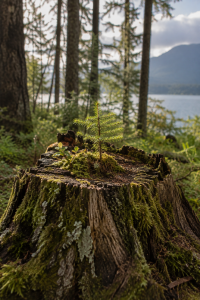
Daniel Christian Wahl explores the wisdom held in Indigenous and Earth-based traditions and what it can teach us about living in reciprocal relationship with the living world. Drawing on Indigenous knowledge and contemporary science, he considers regeneration, interdependence, and the shift from seeing ourselves as masters of nature to understanding ourselves as participants in the wider community of life.
22a. Finding Wisdom in Science and Indigenous Knowledge
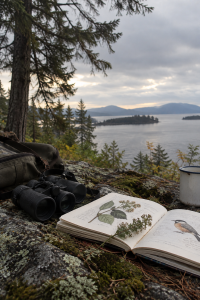
In this article, David Suzuki reflects on the strengths and limitations of scientific knowledge and the importance of placing scientific discoveries within a broader understanding of our relationship with the living world. He contrasts science’s emphasis on observation and objectivity with Indigenous knowledge, which draws on generations of experience, place-based understanding, reciprocity, gratitude, and responsibility. Suzuki argues that bringing these ways of knowing together can offer a fuller understanding of our place within nature.

22. Remembering and Honoring Indigenous Practices
Drawing from an interview with Francis Weller and Alnoor Ladha, this reflection explores what Indigenous and traditional cultures can teach us about restoring community, ritual, belonging, and connection with the natural world. It considers the wounds created by isolation, individualism, extraction, and separation, and asks what we might reclaim through communal healing, reciprocity, sacred relationship, and a deeper sense of our interconnected place within the living world.

16b. How Do We Change Our Energies?
What does it take to change the way we experience ourselves, one another, and the world around us? Drawing from the work of Dr. Joe Dispenza, MaryCarol R. Hunter and colleagues, Humanity’s Team, and Indra Adnan, this reflection explores consciousness, nervous-system regulation, connection with nature, collaboration, and the possibility of personal and collective transformation.

16a. No Tree Knows Mystery: Drawing Parallels Between the Life of a Human and a Tree
Nature can be a profound teacher, and the life of a tree offers a powerful mirror for understanding our own. From roots and branches to growth, vulnerability, loss, renewal, and death, this reflection by Michael Ribas explores the parallels between human life and the life of a tree. The tree reminds us of the importance of balance between light and darkness, our dependence on the environments that sustain us, and the cycles of giving, receiving, transformation, and renewal that connect all life.

16. Returning to Our True Nature: Finding Right Balance
What does it mean for humans to live in right balance with ourselves, one another, and the natural world? This reflection explores our essential connection with Mother Earth and the ways that reconnecting with nature may help us return to greater gentleness, kindness, compassion, serenity, and peace. Drawing from the practice of shinrin-yoku, or forest bathing, and the work of Qing Li, Julia Plevin, and Yoshifumi Miyazaki, it considers how intentional time in nature can support our nervous systems, well-being, and capacity to reconnect with ourselves.

15. Declaration of Interdependence
Source: https://davidsuzuki.org/about/declaration-of-interdependence The Declaration of Interdependence expresses our values as an organization. It was written for the 1992 UN Earth Summit in Rio de Janeiro, where portions of our declaration were woven into the work of others around the world to form the Earth Charter. This we know We are
13b. The Psychological Roots of the Climate Crisis
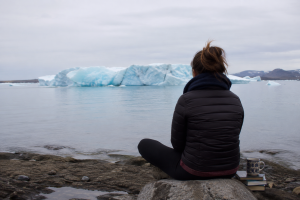
Sally Weintrobe explores the psychological and cultural forces underlying the climate crisis, focusing on the tension between a caring and an uncaring imagination. She examines how exceptionalism, entitlement, neoliberalism, consumerism, denial, and “uncare” shape our relationship with one another and the living world. The book also asks what it would take to cultivate a more caring imagination capable of facing difficult truths and creating a sustainable future.
14. Healing Our Rupture with Mother Earth
Drawing from Thich Nhat Hanh’s The World We Have and Love Letter to the Earth, this reflection explores the deep rupture between human beings and the Earth and how that separation has contributed to climate crisis, consumerism, alienation, and violence. It considers Thich Nhat Hanh’s invitation to restore our relationship with the Earth through mindfulness, love, collective awakening, and a renewed recognition that we are not separate from the living world – we are part of it.
13a. Regarding Goddess Cultures
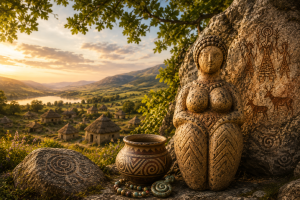
Archeologist Marija Gimbutas posits the idea of a Western society before patriarchy, a ‘Goddess Culture’ based on excavations of goddess sculptures unearthed in 1973-1974. As the aesthetic nature of these excavations differed from the works of the Bronze Age, she believed that this culture was distinct from the known Indo-European culture and called this subsect of Southeastern European Neolithic culture ‘Old Europe’ (Murdock 11).

2. Where to Begin? Practices for “Right Balance”
I start with the premise, myself, that I need first to be grounded firmly on the ground and connected firmly with Nature. For me, that seems a necessity. I even have a bias that that is needed for all humans to be in right balance with their essential nature. For

38. Humanity & Nature Are Not Separate
Though a varied and complex story, the widespread separation of humans from nature in Western culture can be traced to a few key historical developments, starting with the rise of Judeo-Christian values 2000 years ago. Prior to this point, belief systems with multiple gods and earth spirits, such as paganism,

13c. I believe we have lost our way
I believe we have lost our way. We are in trouble. How do we right our ship? How can we all become motivated to right our ship? What on earth are we doing threatening the extinction of our planetary home? What on earth are we doing threatening (and causing) the

11. “Right Balance” Systemically: When Checks & Balances Break Down
This image is meant to represent different energies within ourselves (also see Necessary Elements to Finding “Right Balance” Interpersonally). For instance, is our time spent working balanced out sufficiently by our time spent relaxing or playing? Is the amount of energy we expend to give to others sufficiently counterbalanced by


8. IFS: Issues of Projections & Coming From “Parts”
In all interpersonal relationships, we are vulnerable to projections. Our doing so seems most likely to happen in intense intimate relationships, when old relationship dynamics are most readily triggered. (Our amygdala takes on a “scanning” function, recognizes when “like” seems similar to “like,” and we respond accordingly, usually out of

7. Relationship Repair after a Rupture
Discussions about restoring a better balance, particularly after a rupture – say if one partner has broken out of an old pattern? This image is intended to convey the sense that one partner has grown beyond a previous “fit” within a relationship. This happens not infrequently, if one partner is

6. Enmeshment, Codependency, Over or Under-Functioning Within a Relationship
Discussions about “right balance” interpersonally — what if there has been enmeshment, codependency, over-functioning, or under-functioning within a relationship? If we draw from the issues of balance (or imbalance) within ourselves, what if two people (each with their own idiosyncratic imbalances) get together? If we take two individuals, each in

4. Being in the Body & Finding “Right Balance”
I have myself been in recovery from various eating disorders for over 50 years and worked with people with eating disorders for a similar amount of time. To some “finding our right body” might seem a question that does not even need asking. However, for people who have been over

3. Trauma, Needs, Protective Maneuvers & Impacts on “Right Balance”?
What if – for instance – we had a very narcissistic demanding parent, and our safety required giving attention to them more than being able to attune to ourselves, explore our own self-awareness, express our own ideas? Or what if we needed to sharply curtail our expectations of receiving from

Barcelona’s Experiment in Radical Democracy
Introduction There are a couple of themes in this article that stand out to me as important, and why I chose this article to include. Three main themes that spoke to me are (a) “Feminization” of Politics, and (b) concern to retain community common space that is for everyone, and

Matrix of White Supremacy
[New podcast] “Unplugging from the Matrix of White Supremacy” Tami Simon speaks with Rachel Ricketts about spiritual activism, the presence of our ancestors, and the healing work of racial justice. Here is what changemaker, attorney, and healer Rachel Ricketts said at the beginning of our conversation about her new book,

Living a Life of Purpose
Psychotherapist and yoga teacher Stephen Cope’s new book The Great Work of Your Life challenges us to find our true purpose in life, which he believes all of us can achieve. Here, he gives a taste of the struggle and payoff that comes with seeking to find and cultivate our

