
28. “News” as propaganda

An examination of the close relationship between Fox News and the Trump White House, and the ways media, political power, and business interests can become deeply intertwined. Drawing on Jane Mayer’s reporting, the piece explores the movement of personnel between Fox and the administration, the influence of media narratives on political discourse, and the challenges this creates for the independence of journalism.
27a. Age of Aquarius, Summary

A summary of the astrological concept of the Age of Aquarius, tracing the symbolic themes associated with successive astrological ages from Leo through Pisces and into Aquarius. The piece explores ideas of individual consciousness, freedom, technology, collaboration, humanitarianism, and the movement from hierarchical systems toward networks and collective participation.
22i. Seeds of Life with Grandmother Jyoti Ma

A webinar exploring the wisdom of seeds, both the physical seeds that sustain future generations and the inner seeds of growth within each of us. Grandmother Jyoti Ma and other elders share teachings on heirloom seeds, Indigenous wisdom, reciprocity, sacred relationship with Earth, and nurturing the conditions for healing, unity, and a more collaborative way of living.
22f. The Wisdom of Our Ancestors

David Korten draws on wisdom traditions from Africa, the Andes, Asia, and other cultures to explore a worldview grounded in interdependence, community, and care for the Earth. Through principles such as ubuntu and buen vivir, he examines how our ideas about purpose, power, economics, community, and education might shift toward greater wellbeing for people and the living world.
22d. An Interview with Francis Weller: Initiation, Trauma and Ritual

In this conversation, Francis Weller and Alnoor Ladha explore the relationship between trauma, initiation, ritual, and community. Weller reflects on how traditional and Indigenous cultures have used communal practices to hold grief and major life transitions, contrasting these with the isolation and individualism of modern culture. The dialogue considers belonging, soul, sacred relationship, and the need to restore community, ritual, and reciprocity in times of profound change.
22. Remembering and Honoring Indigenous Practices

Drawing from an interview with Francis Weller and Alnoor Ladha, this reflection explores what Indigenous and traditional cultures can teach us about restoring community, ritual, belonging, and connection with the natural world. It considers the wounds created by isolation, individualism, extraction, and separation, and asks what we might reclaim through communal healing, reciprocity, sacred relationship, and a deeper sense of our interconnected place within the living world.
Learning to See in the Dark Amid Catastrophe: An Interview With Deep Ecologist Joanna Macy
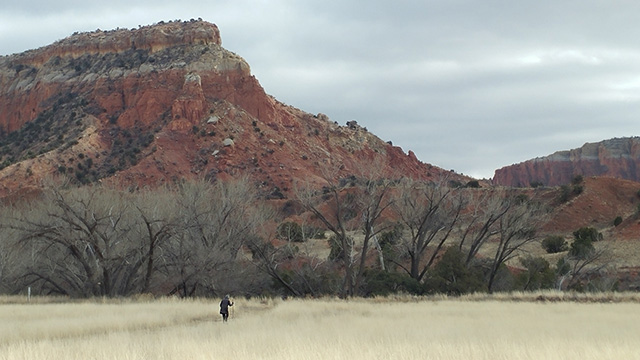
In this interview with Dahr Jamail, Joanna Macy discusses how facing the reality of ecological and social crises can become a pathway toward deeper awareness, connection, and action. She reflects on the Work That Reconnects, the “Great Unraveling” and “Great Turning,” and the importance of moving through grief, fear, and uncertainty together rather than turning against one another.
14. Healing Our Rupture with Mother Earth

Drawing from Thich Nhat Hanh’s The World We Have and Love Letter to the Earth, this reflection explores the deep rupture between human beings and the Earth and how that separation has contributed to climate crisis, consumerism, alienation, and violence. It considers Thich Nhat Hanh’s invitation to restore our relationship with the Earth through mindfulness, love, collective awakening, and a renewed recognition that we are not separate from the living world – we are part of it.
13b. The Psychological Roots of the Climate Crisis

Sally Weintrobe explores the psychological and cultural forces underlying the climate crisis, focusing on the tension between a caring and an uncaring imagination. She examines how exceptionalism, entitlement, neoliberalism, consumerism, denial, and “uncare” shape our relationship with one another and the living world. The book also asks what it would take to cultivate a more caring imagination capable of facing difficult truths and creating a sustainable future.
The Ascent of Humanity
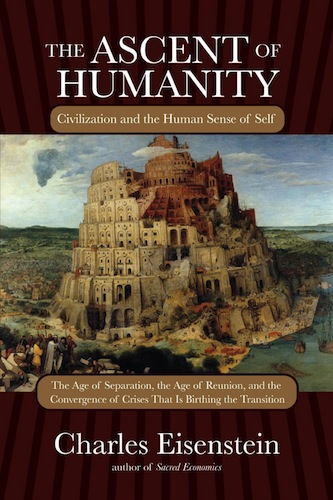
The Ascent of Humanity is about the history and future of civilization from a unique perspective: the evolution of the human sense of self. This book describes how all the expressions of our civilization—its miraculous technology as well as the pillage of earth, culture, goodness, and beauty—arise from our identity, our way of being, “the discrete and separate self”. The gathering crises of our age demonstrate that this way of being is on the verge of collapse. And this collapse is setting the stage for a revolution in human beingness whose stirrings we already begin to feel.