
24. Global Challenges Are Directing Us Toward a Unity of Purpose

An exploration of how global crises, social division, and collective uncertainty can become catalysts for greater cooperation and unity. The authors consider the movement from separation and hierarchy toward wholeness, ethical responsibility, deeper listening, and a shared sense of purpose across differences.
Center for Humans and Nature

The Center for Humans and Nature seeks to dismantle cultural structures built on racism, White supremacy, and the exploitation of Black people, Indigenous people, and People of Color. Within the tangle of racism, inequality, violence, environmental degradation, toxic individualism, and unethical economics, we celebrate and affirm life-sustaining processes and relationships.
Full Transcript of Michelle Obama’s D.N.C. Speech

This New York Times article provides the full transcript of Michelle Obama’s keynote speech from the first night of the 2020 Democratic National Convention. In the speech, Obama reflects on American democracy, presidential leadership, injustice, civic participation, and the responsibilities of voters and leaders.
The Great Turning By Joanna Macy

Joanna Macy describes the “Great Turning” as the transition from an Industrial Growth Society to a life-sustaining civilization. She identifies three interconnected pathways for change: slowing ecological destruction, understanding and transforming the economic and political structures causing it, and creating new life-sustaining social and economic alternatives. The article frames the ecological crisis not simply as an environmental problem, but as a systemic transformation already underway.
Democracy Demands a Richer Britain

Drawing on research into political participation and income inequality, Jem Bendell and Matthew Lopatin argue that economic disparity is eroding democratic life. They call for a broader public conversation about reshaping the economy so that prosperity, participation, and political stability are shared more equitably across society.
Why a California oil workers union is getting behind clean energy

Challenging the assumption that organized labor and climate action are inherently at odds, this article examines a proposal for creating hundreds of thousands of clean energy jobs while supporting workers through the transition away from fossil fuels. It highlights the importance of pairing ambitious climate policy with economic security and a just transition for affected communities.
The Uninhabitable Earth
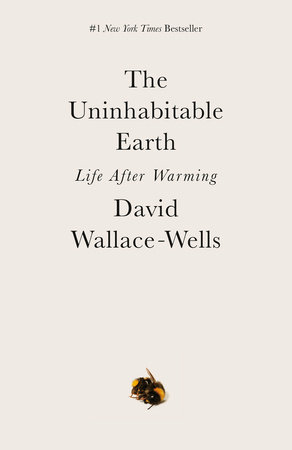
It is worse, much worse, than you think. If your anxiety about global warming is dominated by fears of sea-level rise, you are barely scratching the surface of what terrors are possible—food shortages, refugee emergencies, climate wars and economic devastation.
The Uninhabitable Earth is both a travelogue of the near future and a meditation on how that future will look to those living through it—the ways that warming promises to transform global politics, the meaning of technology and nature in the modern world, the sustainability of capitalism and the trajectory of human progress.
The Shock Doctrine: The Rise of Disaster Capitalism

In her groundbreaking reporting, Naomi Klein introduced the term “disaster capitalism.” Whether covering Baghdad after the U.S. occupation, Sri Lanka in the wake of the tsunami, or New Orleans post-Katrina, she witnessed something remarkably similar. People still reeling from catastrophe were being hit again, this time with economic “shock treatment,” losing their land and homes to rapid-fire corporate makeovers.
The Shock Doctrine retells the story of the most dominant ideology of our time, Milton Friedman’s free market economic revolution. In contrast to the popular myth of this movement’s peaceful global victory, Klein shows how it has exploited moments of shock and extreme violence in order to implement its economic policies in so many parts of the world from Latin America and Eastern Europe to South Africa, Russia, and Iraq.
At the core of disaster capitalism is the use of cataclysmic events to advance radical privatization combined with the privatization of the disaster response itself. Klein argues that by capitalizing on crises, created by nature or war, the disaster capitalism complex now exists as a booming new economy, and is the violent culmination of a radical economic project that has been incubating for fifty years.
Sacred Economics (revised)

Revised as of 2020, Sacred Economics traces the history of money from ancient gift economies to modern capitalism, revealing how the money system has contributed to alienation, competition, and scarcity, destroyed community, and necessitated endless growth. Today, these trends have reached their extreme—but in the wake of their collapse, we may find great opportunity to transition to a more connected, ecological, and sustainable way of being.
This book is about how the money system can change to embody this transition, and how we might change in tandem. A broadly integrated synthesis of theory, policy, and practice, Sacred Economics explores avant-garde concepts of the New Economics, including negative-interest currencies, local currencies, gift economics, and the restoration of the commons.
The Declaration of Interdependence

I have included this powerful text, sadly from fully 30 years ago – sadly because we seem (as humans) not to have learned or heeded a thing since then about our interconnectedness. I have included the document itself (at the end) and some information about David Suzuki himself drawn from a biography from the Britannica […]