
The Shock Doctrine: The Rise of Disaster Capitalism

In her groundbreaking reporting, Naomi Klein introduced the term “disaster capitalism.” Whether covering Baghdad after the U.S. occupation, Sri Lanka in the wake of the tsunami, or New Orleans post-Katrina, she witnessed something remarkably similar. People still reeling from catastrophe were being hit again, this time with economic “shock treatment,” losing their land and homes to rapid-fire corporate makeovers.
The Shock Doctrine retells the story of the most dominant ideology of our time, Milton Friedman’s free market economic revolution. In contrast to the popular myth of this movement’s peaceful global victory, Klein shows how it has exploited moments of shock and extreme violence in order to implement its economic policies in so many parts of the world from Latin America and Eastern Europe to South Africa, Russia, and Iraq.
At the core of disaster capitalism is the use of cataclysmic events to advance radical privatization combined with the privatization of the disaster response itself. Klein argues that by capitalizing on crises, created by nature or war, the disaster capitalism complex now exists as a booming new economy, and is the violent culmination of a radical economic project that has been incubating for fifty years.
Sacred Economics (revised)

Revised as of 2020, Sacred Economics traces the history of money from ancient gift economies to modern capitalism, revealing how the money system has contributed to alienation, competition, and scarcity, destroyed community, and necessitated endless growth. Today, these trends have reached their extreme—but in the wake of their collapse, we may find great opportunity to transition to a more connected, ecological, and sustainable way of being.
This book is about how the money system can change to embody this transition, and how we might change in tandem. A broadly integrated synthesis of theory, policy, and practice, Sacred Economics explores avant-garde concepts of the New Economics, including negative-interest currencies, local currencies, gift economics, and the restoration of the commons.
The Declaration of Interdependence

I have included this powerful text, sadly from fully 30 years ago – sadly because we seem (as humans) not to have learned or heeded a thing since then about our interconnectedness. I have included the document itself (at the end) and some information about David Suzuki himself drawn from a biography from the Britannica […]
Barcelona’s Experiment in Radical Democracy
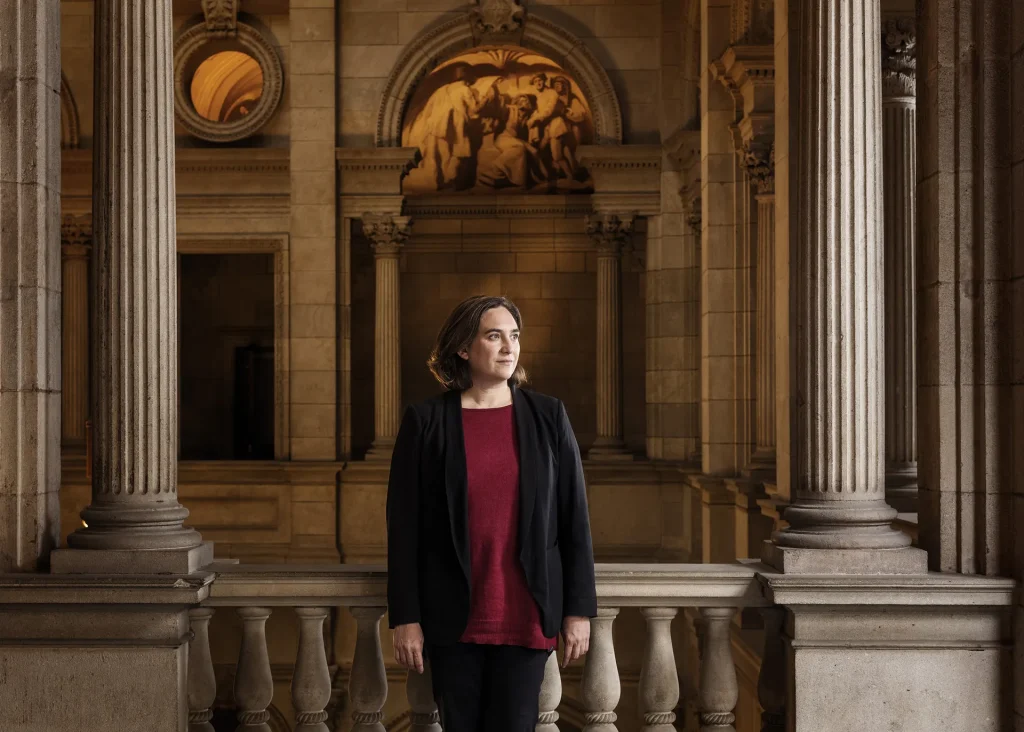
Introduction There are a couple of themes in this article that stand out to me as important, and why I chose this article to include. Three main themes that spoke to me are (a) “Feminization” of Politics, and (b) concern to retain community common space that is for everyone, and (c) the principle of spending […]