
Tending the Wild
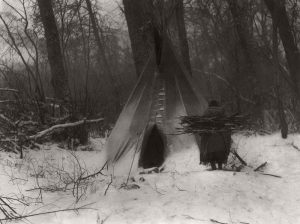
Drawing on Kat Anderson’s Tending the Wild, Charles Eisenstein challenges the enduring myth of untouched wilderness, revealing how Indigenous peoples actively cultivated and enriched the landscapes they inhabited. He invites a reconsideration of humanity’s role in nature—not as separate from the living world, but as participants capable of leaving a healing rather than destructive trace.
Indigenous Community: Rekindling the Teachings of the Seventh Fire

In his book, Indigenous Community, Dr. Cajete takes up the question: What kind of ways of teaching and learning do Indigenous peoples need to revitalize, maintain, and sustain Indigenous Community in the 21st century and beyond? He considers:
• the changes in the nature of Indigenous community that have occurred because of colonization;
• the present state of Indigenous community;
• how to create an educational context for renewing and revitalizing Indigenous community;
• case studies of how community-based educational planning has brought community renewal;
• the role of community-based research for renewal and sustainability; and more.
Tending the Wild

By M. KAT ANDERSON
A complex look at California Native ecological practices as a model for environmental sustainability and conservation.
John Muir was an early proponent of a view we still hold today—that much of California was pristine, untouched wilderness before the arrival of Europeans. But as this groundbreaking book demonstrates, what Muir was really seeing when he admired the grand vistas of Yosemite and the gold and purple flowers carpeting the Central Valley were the fertile gardens of the Sierra Miwok and Valley Yokuts Indians, modified and made productive by centuries of harvesting, tilling, sowing, pruning, and burning. Marvelously detailed and beautifully written, Tending the Wild is an unparalleled examination of Native American knowledge and uses of California’s natural resources that reshapes our understanding of native cultures and shows how we might begin to use their knowledge in our own conservation efforts.
Native Solutions to Big Fires

Native practices of controlled burns (also practiced by indigenous folk in Australia and India) were banned under settler colonialism, but the rise in uncontrolled fires is making officials revisit more traditional methods of conservation
Article reviewed and suggested by Tulika Monhan
Return the National Parks to the Tribes

David Treuer, 2021, Atlantic Magazine
Recovering the Sacred: The Power of Naming and Claiming

By Winona LaDuke.
The indigenous imperative to honor nature is undermined by federal laws approving resource extraction through mining and drilling. Formal protections exist for Native American religious expression, but not for the places and natural resources integral to ceremonies. Under what conditions can traditional beliefs be best practiced?
Recovering the Sacred features a wealth of native research and hundreds of interviews with indigenous scholars and activists.
The Shock Doctrine: The Rise of Disaster Capitalism

In her groundbreaking reporting, Naomi Klein introduced the term “disaster capitalism.” Whether covering Baghdad after the U.S. occupation, Sri Lanka in the wake of the tsunami, or New Orleans post-Katrina, she witnessed something remarkably similar. People still reeling from catastrophe were being hit again, this time with economic “shock treatment,” losing their land and homes to rapid-fire corporate makeovers.
The Shock Doctrine retells the story of the most dominant ideology of our time, Milton Friedman’s free market economic revolution. In contrast to the popular myth of this movement’s peaceful global victory, Klein shows how it has exploited moments of shock and extreme violence in order to implement its economic policies in so many parts of the world from Latin America and Eastern Europe to South Africa, Russia, and Iraq.
At the core of disaster capitalism is the use of cataclysmic events to advance radical privatization combined with the privatization of the disaster response itself. Klein argues that by capitalizing on crises, created by nature or war, the disaster capitalism complex now exists as a booming new economy, and is the violent culmination of a radical economic project that has been incubating for fifty years.
32. The Story of Ishmael
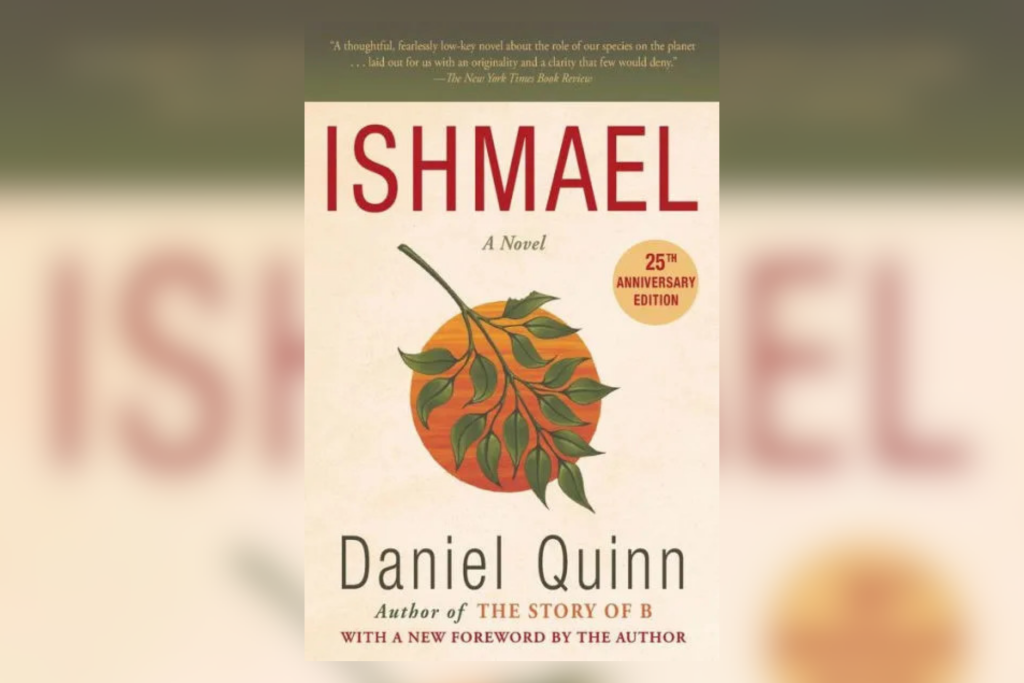
(suggestion from Bridget Birdsall) If you haven’t read a book called ISHMAEL—the protagonist is a gorilla who may have some answers to your question. It’s been around for a while but is so darn timely, and a well-written good read to reflect upon…because in awareness of the problem, just like in the healing process, as […]
The Declaration of Interdependence

I have included this powerful text, sadly from fully 30 years ago – sadly because we seem (as humans) not to have learned or heeded a thing since then about our interconnectedness. I have included the document itself (at the end) and some information about David Suzuki himself drawn from a biography from the Britannica […]
Decolonization is not a metaphor
A great academic paper on the US state’s treatment of Native Americans and how even recent movements that aim at reducing the wealth gap, providing reparations, redistributing land, etc. continue to perpetuate the low socio-economic status of Native Americans.