
25. Tending the Wild, Charles Eisenstein

A reflection on Indigenous relationships with land and the ways California Native communities intentionally tended and shaped ecosystems over generations. Drawing on Kat Anderson’s Tending the Wild, Charles Eisenstein explores a different understanding of stewardship, one based not on leaving nature untouched, but on developing intimate, reciprocal relationships with the living world and learning how to participate in its regeneration.
22k. Kat Anderson – Tending the Wild

A reflection on Indigenous relationships with land, community, and the living world, drawing on M. Kat Anderson’s Tending the Wild. The book documents how California Native communities actively tended landscapes through practices such as harvesting, sowing, pruning, and controlled burning, challenging the idea of untouched wilderness and offering a different understanding of stewardship and reciprocity.
22h. Indigenous Teachings

A collection of books exploring Indigenous knowledge, community, ecological wisdom, and ways of living in reciprocal relationship with the natural world.
22f. The Wisdom of Our Ancestors

David Korten draws on wisdom traditions from Africa, the Andes, Asia, and other cultures to explore a worldview grounded in interdependence, community, and care for the Earth. Through principles such as ubuntu and buen vivir, he examines how our ideas about purpose, power, economics, community, and education might shift toward greater wellbeing for people and the living world.
22b. Indigenous to Life

Daniel Christian Wahl explores the wisdom held in Indigenous and Earth-based traditions and what it can teach us about living in reciprocal relationship with the living world. Drawing on Indigenous knowledge and contemporary science, he considers regeneration, interdependence, and the shift from seeing ourselves as masters of nature to understanding ourselves as participants in the wider community of life.
22a. Finding Wisdom in Science and Indigenous Knowledge

In this article, David Suzuki reflects on the strengths and limitations of scientific knowledge and the importance of placing scientific discoveries within a broader understanding of our relationship with the living world. He contrasts science’s emphasis on observation and objectivity with Indigenous knowledge, which draws on generations of experience, place-based understanding, reciprocity, gratitude, and responsibility. Suzuki argues that bringing these ways of knowing together can offer a fuller understanding of our place within nature.
In the Absence of the Ordinary – Francis Weller
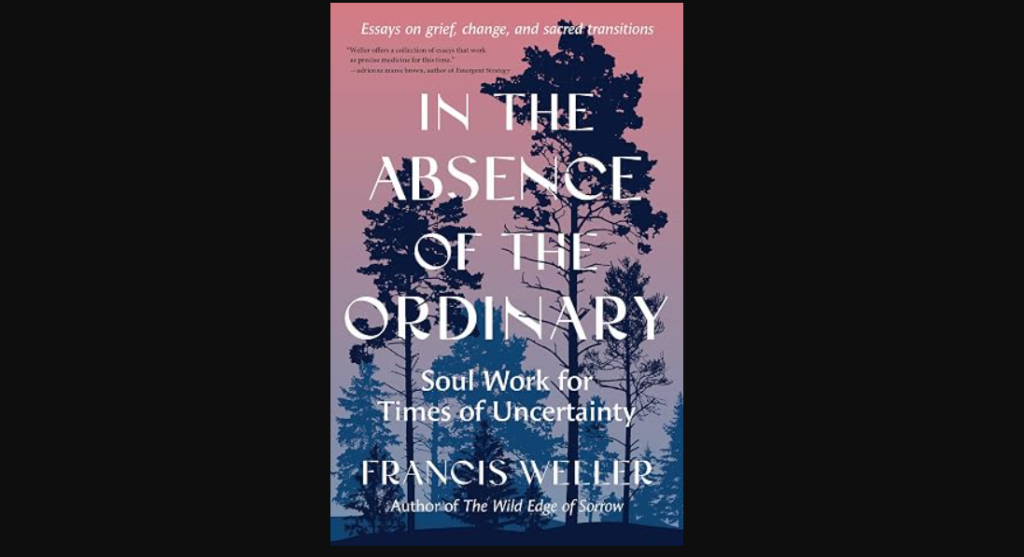
In In the Absence of the Ordinary, Francis Weller reflects on living through a time of uncertainty, upheaval, and profound transition. Across 17 essays, he explores grief, soul, belonging, and our relationship with the natural world, inviting readers to cultivate new ways of being, relating, and caring for one another and the living Earth.
Resonance Path Institute – Spring Chen & Joe Shirley

Resonance Path Institute explores personal and collective transformation during a time of climate change, ecological disruption, and social upheaval. Its work focuses on developing new ways of seeing, being, and knowing while cultivating a deeper sense of wholeness and connection between body, mind, soul, and the wider Earth community.
Center for Humans and Nature
The Center for Humans and Nature seeks to dismantle cultural structures built on racism, White supremacy, and the exploitation of Black people, Indigenous people, and People of Color. Within the tangle of racism, inequality, violence, environmental degradation, toxic individualism, and unethical economics, we celebrate and affirm life-sustaining processes and relationships.
Roots of Resilience | Action Tree
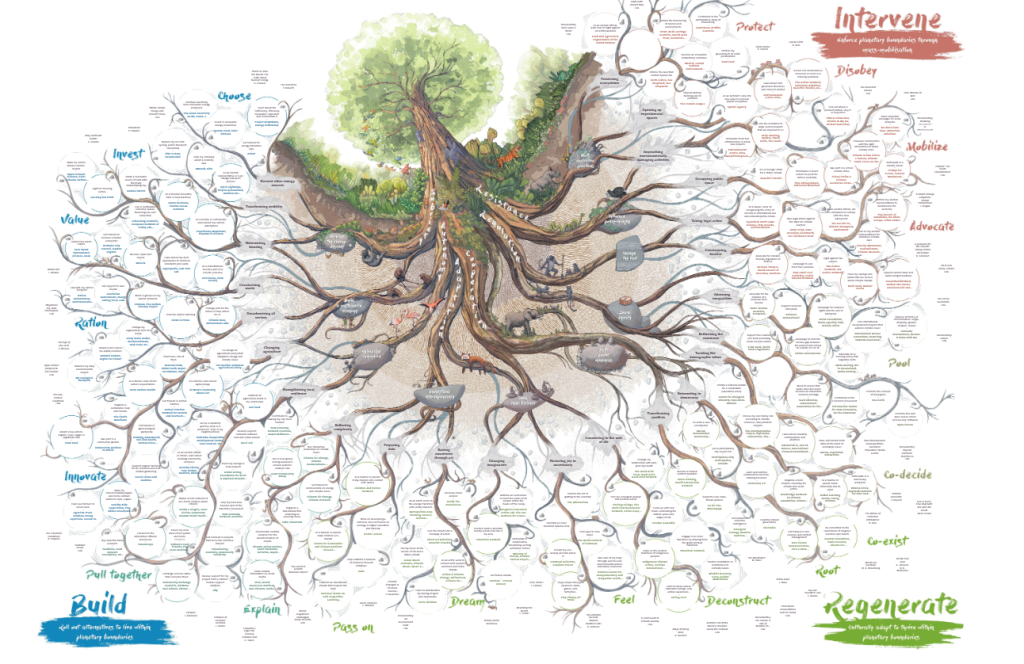
Energy, climate, collapse, resilience… Now what?
More than 200 ways to get moving.
Everyone can find a way to act, in their own way. What’s your next step?