
22a. Finding Wisdom in Science and Indigenous Knowledge

In this article, David Suzuki reflects on the strengths and limitations of scientific knowledge and the importance of placing scientific discoveries within a broader understanding of our relationship with the living world. He contrasts science’s emphasis on observation and objectivity with Indigenous knowledge, which draws on generations of experience, place-based understanding, reciprocity, gratitude, and responsibility. Suzuki argues that bringing these ways of knowing together can offer a fuller understanding of our place within nature.
In the Absence of the Ordinary – Francis Weller
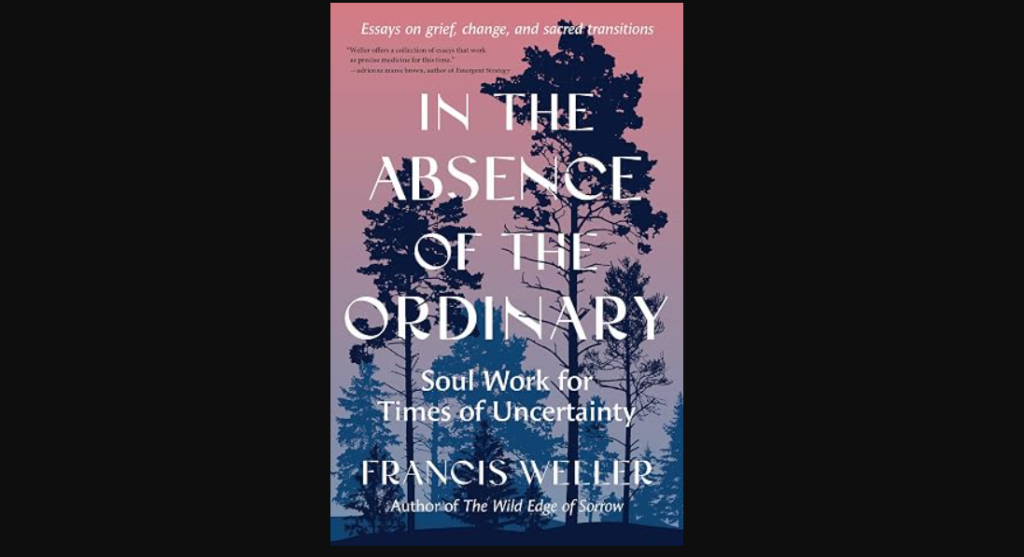
In In the Absence of the Ordinary, Francis Weller reflects on living through a time of uncertainty, upheaval, and profound transition. Across 17 essays, he explores grief, soul, belonging, and our relationship with the natural world, inviting readers to cultivate new ways of being, relating, and caring for one another and the living Earth.
Resonance Path Institute – Spring Chen & Joe Shirley

Resonance Path Institute explores personal and collective transformation during a time of climate change, ecological disruption, and social upheaval. Its work focuses on developing new ways of seeing, being, and knowing while cultivating a deeper sense of wholeness and connection between body, mind, soul, and the wider Earth community.
Center for Humans and Nature
The Center for Humans and Nature seeks to dismantle cultural structures built on racism, White supremacy, and the exploitation of Black people, Indigenous people, and People of Color. Within the tangle of racism, inequality, violence, environmental degradation, toxic individualism, and unethical economics, we celebrate and affirm life-sustaining processes and relationships.
Roots of Resilience | Action Tree
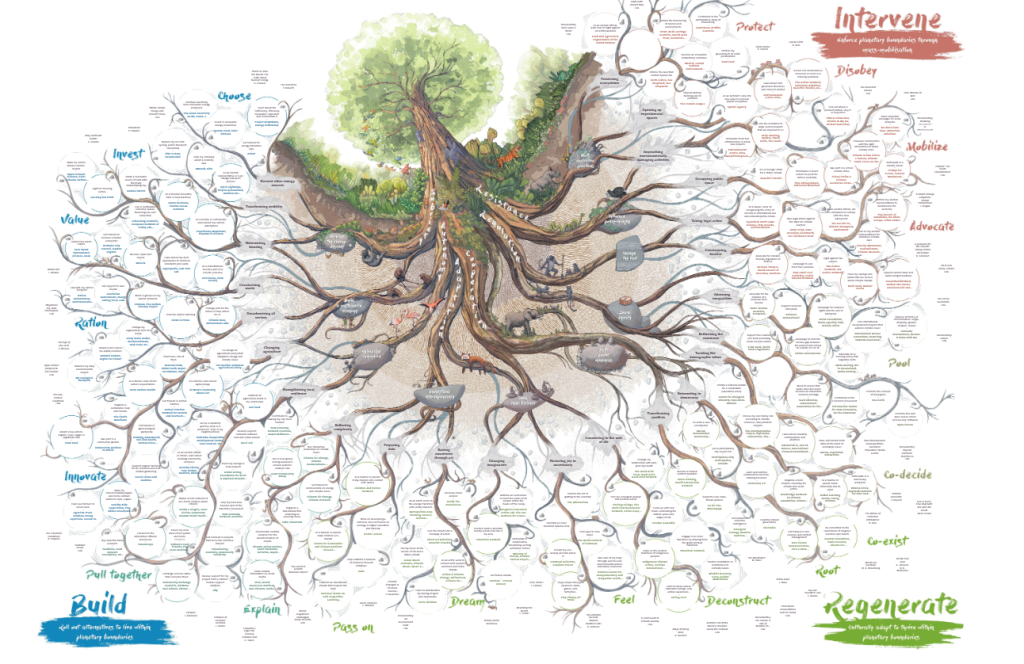
Energy, climate, collapse, resilience… Now what?
More than 200 ways to get moving.
Everyone can find a way to act, in their own way. What’s your next step?
Anna Breytenbach: Interspecies Communication

Anna Breytenbach explores humanity’s relationship with the living world and the possibility of communicating with other species. Drawing on her work with wildlife and conservation, she shares stories and perspectives on deepening our connection with animals and natural environments, while reflecting on Indigenous approaches to nature awareness.
Ancestral legacy of nature’s connections | Teresa Ryan

Teresa Ryan draws on her Tsimshian heritage and her work in fisheries science and natural resource conservation to explore Indigenous approaches to living with natural systems. She shares how ancestral knowledge of cyclical resource production and environmental variability can inform more sustainable approaches to managing fisheries and natural resources today.
How trees talk to each other | Suzanne Simard (TEDSummit)

Suzanne Simard shares her research on the “Wood Wide Web,” revealing how underground fungal networks connect trees and facilitate the exchange of carbon, water, nutrients, and chemical signals. She explains the important role of older “Mother Trees” in supporting younger seedlings and sustaining the health and resilience of forest communities.
Why do Trees Talk to Each Other?

Walk into any forest, and beneath your feet is an elaborate social network that helps make life on Earth possible. It’s called the “Wood Wide Web”, a massive and intricate network of fungi that exchange water, nutrients, and chemical signals with the plants they’re living in a symbiotic relationship with. This network of fungi is essential to the health and function of forests and to controlling climate change itself. You’re about to look at fungi in a whole new way!
Using Traditional Ecological Knowledge as a Framework

Article reviewed and suggested by Tulika Monhan
This overview introduces Traditional Ecological Knowledge (TEK) as an evolving body of wisdom developed through generations of close relationship with the natural world. It explores how Indigenous knowledge has informed modern biology while offering enduring insights into biodiversity, conservation, and the interconnectedness of life.