
30. “Beyond Trump: The failures that led to the Capitol riots”

An examination of the factors surrounding the January 6, 2021 attack on the U.S. Capitol, looking beyond the actions of Donald Trump to consider the roles of political allies, news and social media, law enforcement, and longer-standing forms of extremism and racial division. The piece presents several perspectives on how these overlapping factors contributed to the events and what they might mean for American democracy.
28. “News” as propaganda

An examination of the close relationship between Fox News and the Trump White House, and the ways media, political power, and business interests can become deeply intertwined. Drawing on Jane Mayer’s reporting, the piece explores the movement of personnel between Fox and the administration, the influence of media narratives on political discourse, and the challenges this creates for the independence of journalism.
24. Global Challenges Are Directing Us Toward a Unity of Purpose

An exploration of how global crises, social division, and collective uncertainty can become catalysts for greater cooperation and unity. The authors consider the movement from separation and hierarchy toward wholeness, ethical responsibility, deeper listening, and a shared sense of purpose across differences.
13. How and Why Did We First Lose “Right Balance” with Mother Earth?

A reflection on how humanity may have lost its intimate relationship with the Earth and with one another. Drawing on Indigenous teachings, Goddess cultures, and Marija Gimbutas’s interpretation of prehistoric Europe, the piece considers the relationship between connection, reciprocity, patriarchy, exploitation, and our growing separation from the natural world. It ultimately asks what we can learn from older ways of relating to Earth and each other as we face today’s climate crisis.
22k. Kat Anderson – Tending the Wild

A reflection on Indigenous relationships with land, community, and the living world, drawing on M. Kat Anderson’s Tending the Wild. The book documents how California Native communities actively tended landscapes through practices such as harvesting, sowing, pruning, and controlled burning, challenging the idea of untouched wilderness and offering a different understanding of stewardship and reciprocity.
22d. An Interview with Francis Weller: Initiation, Trauma and Ritual

In this conversation, Francis Weller and Alnoor Ladha explore the relationship between trauma, initiation, ritual, and community. Weller reflects on how traditional and Indigenous cultures have used communal practices to hold grief and major life transitions, contrasting these with the isolation and individualism of modern culture. The dialogue considers belonging, soul, sacred relationship, and the need to restore community, ritual, and reciprocity in times of profound change.
22b. Indigenous to Life

Daniel Christian Wahl explores the wisdom held in Indigenous and Earth-based traditions and what it can teach us about living in reciprocal relationship with the living world. Drawing on Indigenous knowledge and contemporary science, he considers regeneration, interdependence, and the shift from seeing ourselves as masters of nature to understanding ourselves as participants in the wider community of life.
22. Remembering and Honoring Indigenous Practices

Drawing from an interview with Francis Weller and Alnoor Ladha, this reflection explores what Indigenous and traditional cultures can teach us about restoring community, ritual, belonging, and connection with the natural world. It considers the wounds created by isolation, individualism, extraction, and separation, and asks what we might reclaim through communal healing, reciprocity, sacred relationship, and a deeper sense of our interconnected place within the living world.
Learning to See in the Dark Amid Catastrophe: An Interview With Deep Ecologist Joanna Macy
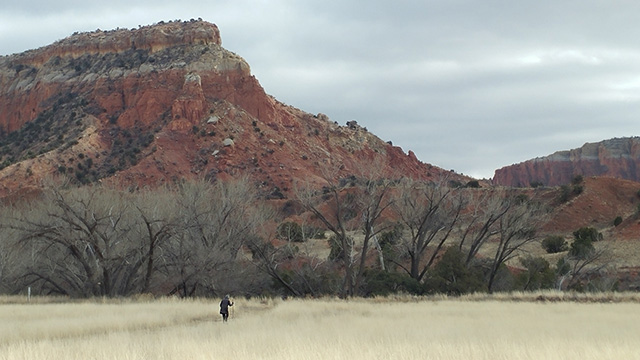
In this interview with Dahr Jamail, Joanna Macy discusses how facing the reality of ecological and social crises can become a pathway toward deeper awareness, connection, and action. She reflects on the Work That Reconnects, the “Great Unraveling” and “Great Turning,” and the importance of moving through grief, fear, and uncertainty together rather than turning against one another.
One World in Dialogue

One World in Dialogue was created in 2015 by Elizabeth Debold with her partner Thomas Steininger as part of emerge bewusstseinskultur e.V., a German nonprofit educational association. The idea behind OWiD is simple: to develop a living global network of change-makers and activists committed to deep dialogue in order to create new approaches and collaborations that support change.