
22d. An Interview with Francis Weller: Initiation, Trauma and Ritual

In this conversation, Francis Weller and Alnoor Ladha explore the relationship between trauma, initiation, ritual, and community. Weller reflects on how traditional and Indigenous cultures have used communal practices to hold grief and major life transitions, contrasting these with the isolation and individualism of modern culture. The dialogue considers belonging, soul, sacred relationship, and the need to restore community, ritual, and reciprocity in times of profound change.
22b. Indigenous to Life

Daniel Christian Wahl explores the wisdom held in Indigenous and Earth-based traditions and what it can teach us about living in reciprocal relationship with the living world. Drawing on Indigenous knowledge and contemporary science, he considers regeneration, interdependence, and the shift from seeing ourselves as masters of nature to understanding ourselves as participants in the wider community of life.
22. Remembering and Honoring Indigenous Practices

Drawing from an interview with Francis Weller and Alnoor Ladha, this reflection explores what Indigenous and traditional cultures can teach us about restoring community, ritual, belonging, and connection with the natural world. It considers the wounds created by isolation, individualism, extraction, and separation, and asks what we might reclaim through communal healing, reciprocity, sacred relationship, and a deeper sense of our interconnected place within the living world.
Learning to See in the Dark Amid Catastrophe: An Interview With Deep Ecologist Joanna Macy
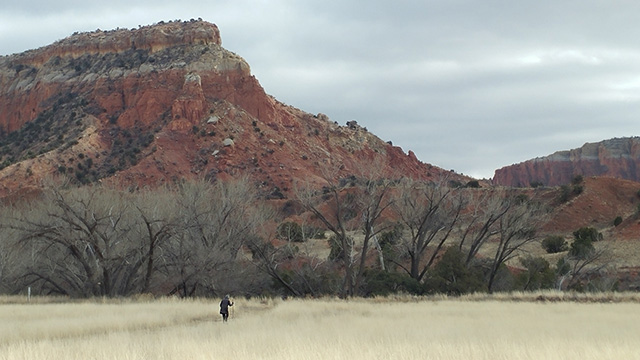
In this interview with Dahr Jamail, Joanna Macy discusses how facing the reality of ecological and social crises can become a pathway toward deeper awareness, connection, and action. She reflects on the Work That Reconnects, the “Great Unraveling” and “Great Turning,” and the importance of moving through grief, fear, and uncertainty together rather than turning against one another.
One World in Dialogue

One World in Dialogue was created in 2015 by Elizabeth Debold with her partner Thomas Steininger as part of emerge bewusstseinskultur e.V., a German nonprofit educational association. The idea behind OWiD is simple: to develop a living global network of change-makers and activists committed to deep dialogue in order to create new approaches and collaborations that support change.
Center for Humans and Nature

The Center for Humans and Nature seeks to dismantle cultural structures built on racism, White supremacy, and the exploitation of Black people, Indigenous people, and People of Color. Within the tangle of racism, inequality, violence, environmental degradation, toxic individualism, and unethical economics, we celebrate and affirm life-sustaining processes and relationships.
Deep Times Journal
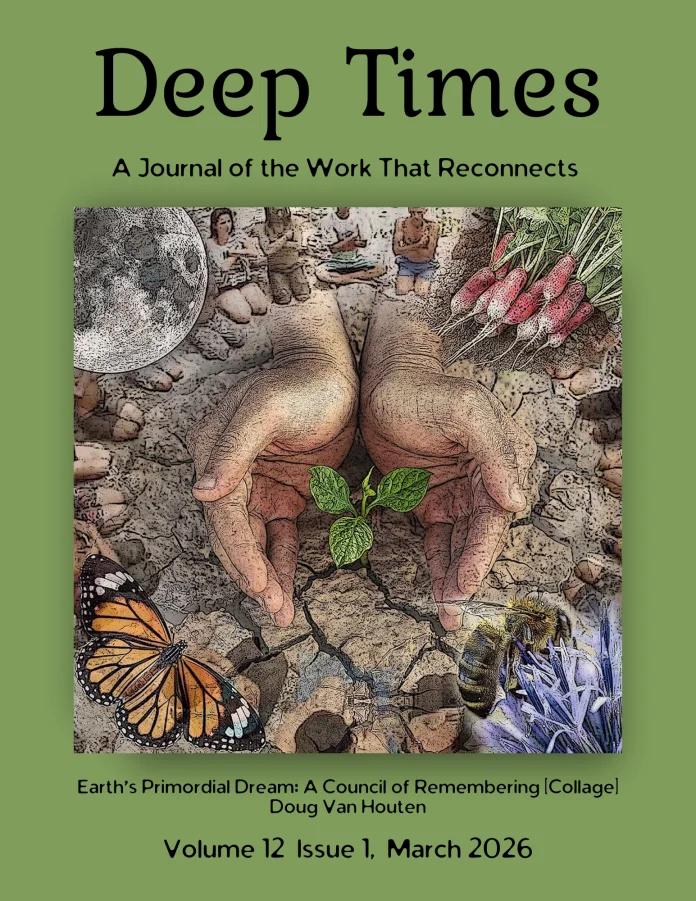
Deep Times is a journal offering articles, art, and poetry rooted in the Work That Reconnects, which emphasizes interdependence within ecosystems and societies. It aims to foster life-sustaining, equitable cultures through inspiration drawn from reconnecting with ancestors and future generations, a concept termed “Deep Time” by Joanna Macy.
14. Healing Our Rupture with Mother Earth

Drawing from Thich Nhat Hanh’s The World We Have and Love Letter to the Earth, this reflection explores the deep rupture between human beings and the Earth and how that separation has contributed to climate crisis, consumerism, alienation, and violence. It considers Thich Nhat Hanh’s invitation to restore our relationship with the Earth through mindfulness, love, collective awakening, and a renewed recognition that we are not separate from the living world – we are part of it.
13b. The Psychological Roots of the Climate Crisis

Sally Weintrobe explores the psychological and cultural forces underlying the climate crisis, focusing on the tension between a caring and an uncaring imagination. She examines how exceptionalism, entitlement, neoliberalism, consumerism, denial, and “uncare” shape our relationship with one another and the living world. The book also asks what it would take to cultivate a more caring imagination capable of facing difficult truths and creating a sustainable future.
13a. Regarding Goddess Cultures

Archeologist Marija Gimbutas posits the idea of a Western society before patriarchy, a ‘Goddess Culture’ based on excavations of goddess sculptures unearthed in 1973-1974. As the aesthetic nature of these excavations differed from the works of the Bronze Age, she believed that this culture was distinct from the known Indo-European culture and called this subsect of Southeastern European Neolithic culture ‘Old Europe’ (Murdock 11).