
23. Dismantling the Patriarchy Within

Anne Baring and Faranak Mirjalili explore how patriarchal patterns can be carried not only through social structures but also within the individual psyche. Drawing on Jungian psychology, dreams, the feminine and masculine principles, and the recovery of instinct and creativity, they consider how inner transformation may contribute to changing wider patterns of domination and disconnection. The conversation also connects these themes with relationships to the natural world, animal life, and the ecological challenges of our time.
13. How and Why Did We First Lose “Right Balance” with Mother Earth?

A reflection on how humanity may have lost its intimate relationship with the Earth and with one another. Drawing on Indigenous teachings, Goddess cultures, and Marija Gimbutas’s interpretation of prehistoric Europe, the piece considers the relationship between connection, reciprocity, patriarchy, exploitation, and our growing separation from the natural world. It ultimately asks what we can learn from older ways of relating to Earth and each other as we face today’s climate crisis.
A Century of suffrage
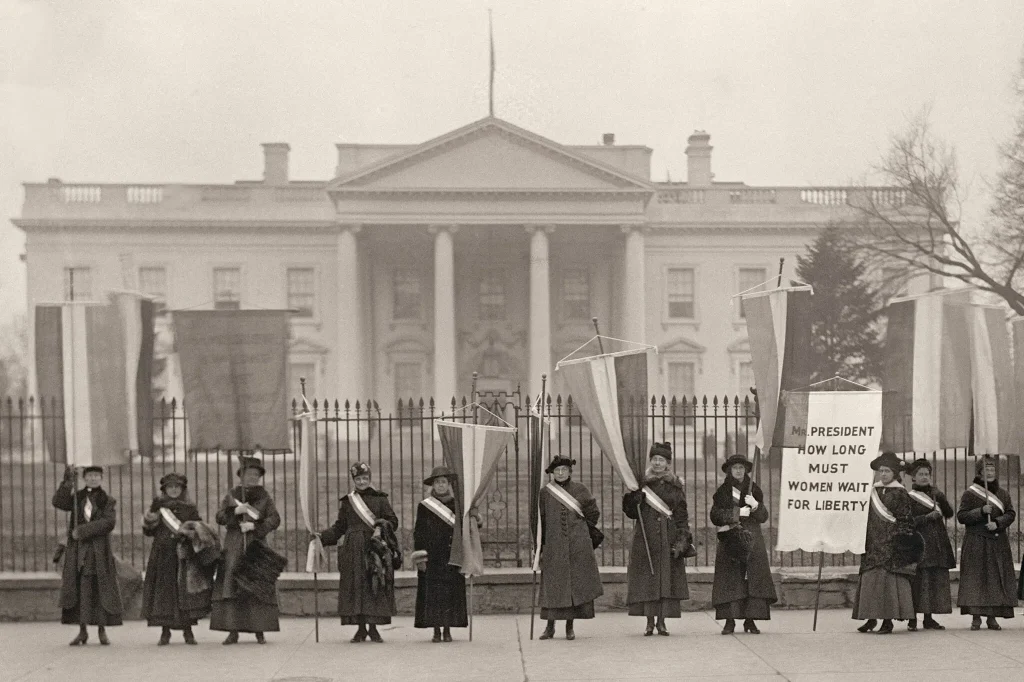
This New York Times article marks the centennial of the ratification of the 19th Amendment and examines the long struggle for women’s voting rights in the United States. It highlights how Native American, Chinese American, and African American women continued to face barriers to voting after 1920, connecting the history of suffrage to the continuing struggle over voting access and political participation.
The End of Patriarchy: Radical Feminism for Men by Robert Jensen
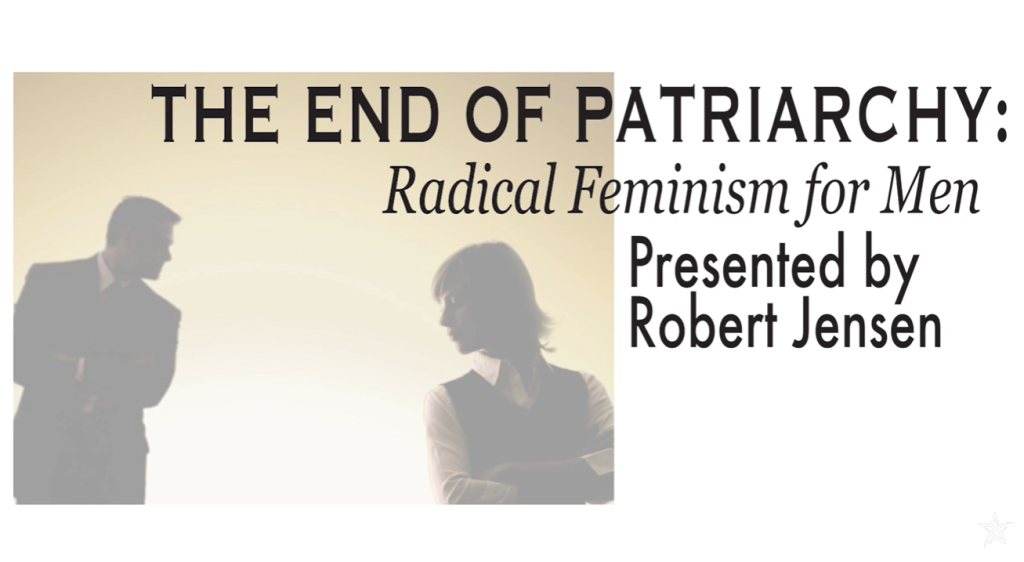
Does a socially just society require a radical feminist overhaul of dominant patriarchal structures? Dr. Robert Jensen is a professor of journalism at The University of Texas, Austin. He is the author of many books, and he writes opinions and analytics on foreign policy, politics, and race for popular media. His work has appeared in papers and magazines across the United States.
13a. Regarding Goddess Cultures

Archeologist Marija Gimbutas posits the idea of a Western society before patriarchy, a ‘Goddess Culture’ based on excavations of goddess sculptures unearthed in 1973-1974. As the aesthetic nature of these excavations differed from the works of the Bronze Age, she believed that this culture was distinct from the known Indo-European culture and called this subsect of Southeastern European Neolithic culture ‘Old Europe’ (Murdock 11).
How Can I Get Through to You?: Closing the Intimacy Gap Between Men and Women
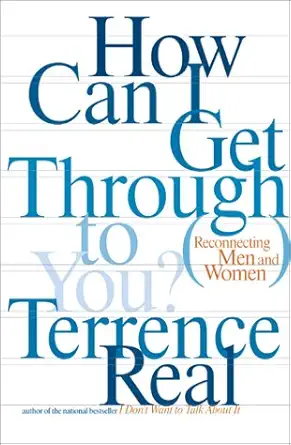
By Terrance Real
Taking a close-up look at gender roles and conditioning, the best-selling author of I Don’t Want to Talk About It explores the current status of intimate relations between men and women and introduces five Core Relationship Skills that couples can use to develop true intimacy. 100,000 first printing.
Men nearly caused human extinction 7,000 years ago, new theory states

Jamie Seidel, 2018
Revisiting the Neolithic Y chromosome bottleneck, this article explores the hypothesis that widespread conflict among male kin groups dramatically reduced male genetic diversity thousands of years ago. It considers how emerging patterns of violence, competition, and social organization may have shaped the development of early human societies.
The End of Patriarchy: Radical Feminism for Men
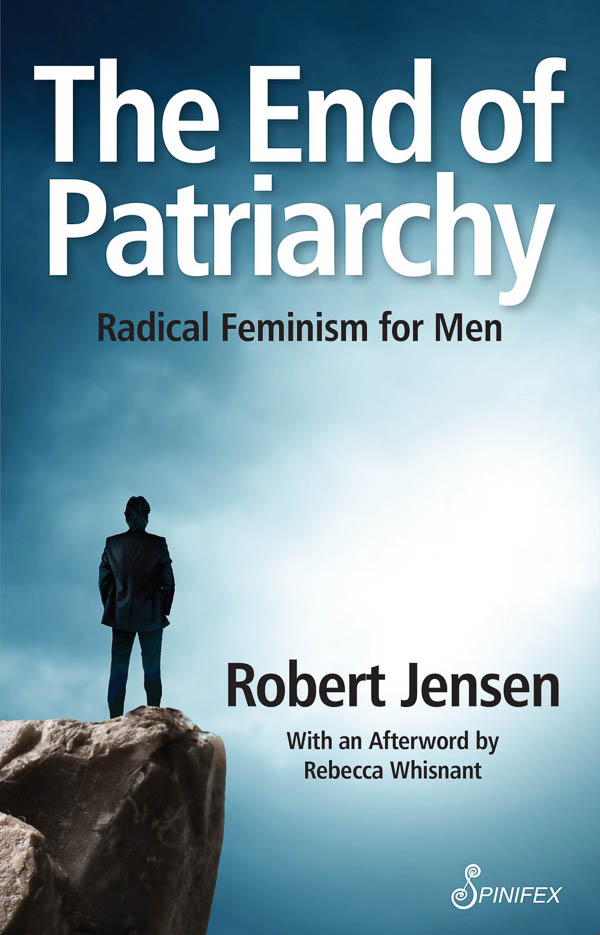
The End of Patriarchy asks one key question: what do we need to create stable and decent human communities that can thrive in a sustainable relationship with the larger living world? Robert Jensen’s answer is feminism and a critique of patriarchy. He calls for a radical feminist challenge to institutionalized male dominance; an uncompromising rejection of men’s assertion of a right to control women’s sexuality; and a demand for an end to the violence and coercion that are at the heart of all systems of domination and subordination. The End of Patriarchy makes a powerful argument that a socially just society requires no less than a radical feminist overhaul of the dominant patriarchal structures.
Social Evolution in Summary with Context

Miki Kashtan, 2019
The underlying principle of patriarchy, as I understand it, is separation and control. The separation is from self, other, life, and nature. The fundamental structures we have created over these millennia are based on dominance and submission, and the worldview we have inherited justifies them as necessary to overcome both our basic nature and “Nature”, seen as separate from us.
We pride self-control and frown on “emotionality”; we operate, organizationally, in command and control forms; we have been treating nature as a thing to exploit, use, subdue, and, most recently, convert to commodities for sale.
Dismantling the Patriarchy Within

Anne Baring and Faranak Mirjalili, 2021
We sat down to speak about the feminine psyche, both individually and collectively, and we also sat down to discuss the challenges that we are facing in this time. If we are to survive as a human species, and most importantly as a whole earth species, we need to come into a better understanding and balance between the feminine and masculine principles. Both these principles need to be equally honored, respected and lived.
But what does this really mean when patriarchy has reigned for more than 4,000 years. How do we know what our feminine qualities are and what does it even mean to be a woman in a time of global climate catastrophe? Are we doing enough as women to stand up against tyrannical political leaders? Is it enough to stand up in protest and even to say no to that which we no longer accept? Are we doing enough to dismantle patriarchy through our outer actions?