
The New Jim Crow
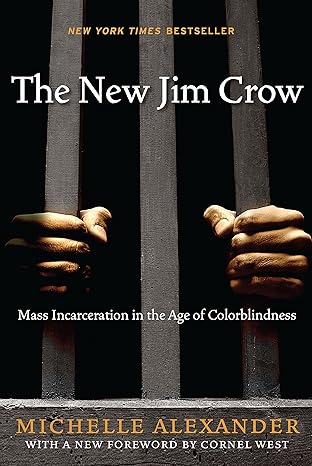
Michelle Alexander argues that mass incarceration has become a new system of racial control in the United States, replacing overt segregation with policies that disproportionately target Black communities while maintaining the appearance of racial neutrality. Drawing on legal history and criminal justice research, she reveals how discrimination persists through institutions that deny millions full citizenship and equal rights.
The Strange Career of Jim Crow
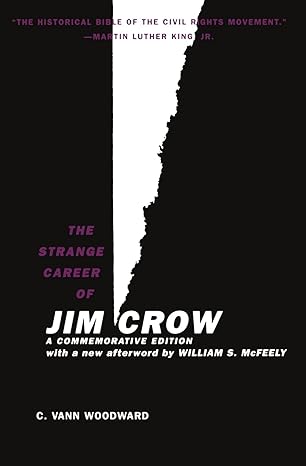
C. Vann Woodward examines the origins of the Jim Crow system, showing that racial segregation in the American South was not an enduring historical tradition but a relatively recent legal and political invention. His influential account reveals how laws and institutions created and sustained racial inequality, reshaping understandings of race, democracy, and justice in the United States.
Birth of a White Nation
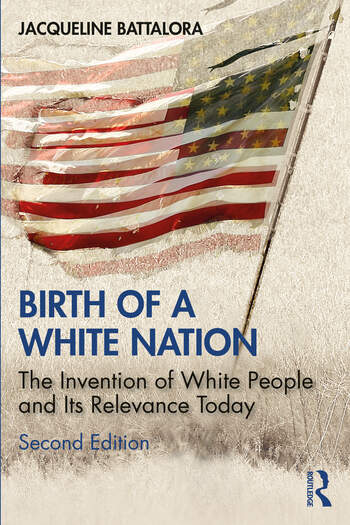
Jacqueline Battalora traces the historical invention of “white people” as a legal and social category, revealing how race was constructed to establish and preserve systems of power and privilege. Drawing on colonial law and history, she examines the enduring legacy of whiteness and offers a framework for understanding—and dismantling—the structures that continue to shape racial inequality today.
Beyond just Trump: The failures that led to the Capitol riots
Mike Bebernes, 2021,
Bringing together a range of perspectives, this article examines the political, cultural, and institutional failures that culminated in the January 6 attack on the U.S. Capitol. It considers the roles of extremist ideologies, media ecosystems, democratic erosion, and the enduring influence of white supremacy in shaping the events of that day.
‘Alt-right’: why the Guardian decided not to ban use of the term
Examining the debate over the term “alt-right,” this article considers how language can shape public understanding of extremist movements. It explores the implications of naming, media responsibility, and the ways in which white supremacist ideologies are represented, challenged, or inadvertently legitimized in public discourse.
Global Challenges Are Directing Us Toward a Unity of Purpose
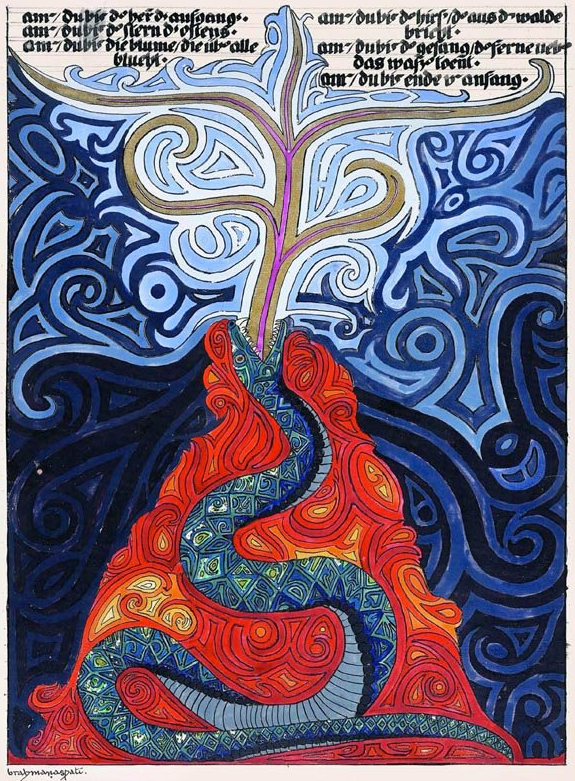
Kurt Johnson, Elena Mustakova, Robert Atkinson, 2021
Living by a consciousness of wholeness prioritizes the whole, engenders a response based on harmony and cooperation, and places a unity of purpose above all else. At the same time, a consciousness of wholeness acknowledges our diversity of views, appearances, and contributions to the whole as our sustaining strength.
This consciousness calls for a complete shift in how we relate to reality. Seeing beyond the illusion of separation allows us to focus on the one reality which is already a unified whole. Anything currently dividing us is also a catalyst for uniting us. We saw this last summer when the streets filled with people calling for racial justice and deep systemic change. A convergence of forces is building like never before. As we join hands across differences, we seek to heal a great divide in the human family.
Covid has Traumatized America: A Doctor Explains What we need to heal

David Marchese, 2021, Dr. Diane E. Meier Interview,
It has to do with trauma. Trauma is widespread. In wealthy families and poor families; individual and family trauma; community trauma and societal trauma. We have so much of that here — just start with racism and go on. It is repressed and treated with denial. That doesn’t make it go away.
It’s controlling how people respond to new trauma, whether it’s a diagnosis or a pandemic or a January 6th. So my perspective on trauma has a bigger scale than it used to — a species-level and tribal-level scale
The Evolution of Environmental Movements: Responding to Impending Threats

By Karin Otsuka, reviewed and suggested by Tulika Mohan
How has the environmental movement evolved—and who has been included or excluded along the way? Tracing its history from Silent Spring to the Environmental Justice Movement, this article explores how pollution, public health, race, and power have shaped environmental advocacy and continue to influence who bears the greatest environmental burdens.
The Will To Change: Men, Masculinity and Love
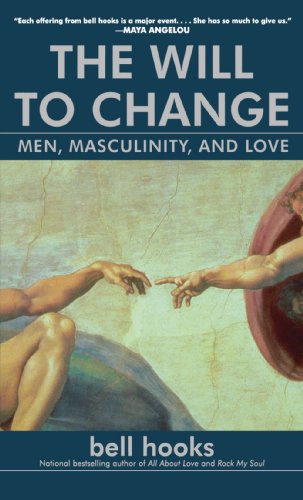
Bell Hooks (born Gloria Jean Watkins) was an African-American author, feminist, and social activist. Her writing focused on the interconnectivity of race, class, and gender and their ability to produce and perpetuate systems of oppression and domination. She published over thirty books and numerous scholarly and mainstream articles, appeared in several documentary films and participated in various public lectures. Primarily through a postmodern female perspective, she addressed race, class, and gender in education, art, history, sexuality, mass media and feminism.
As bell hooks says, “Learning to wear a mask (that word already embedded in the term ‘masculinity’) is the first lesson in patriarchal masculinity that a boy learns. He learns that his core feelings cannot be expressed if they do not conform to the acceptable behaviors sexism defines as male. Asked to give up the true self in order to realize the patriarchal ideal, boys learn self-betrayal early and are rewarded for these acts of soul murder
Nurturing Our Humanity: How Domination and Partnership Shape Our Brains, Lives, and Future
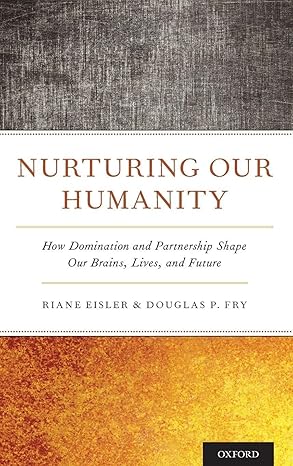
Nurturing Our Humanity offers a new perspective on our personal and social options in today’s world, showing how we can build societies that support our great human capacities for consciousness, caring, and creativity. It brings together findings–largely overlooked–from the natural and social sciences debunking the popular idea that we are hard-wired for selfishness, war, rape, and greed.
Its groundbreaking new approach reveals connections between disturbing trends like climate change denial and regressions to strongman rule. It looks at where societies fall on the partnership-domination scale.
On one end is the domination system that ranks man over man, man over woman, race over race, and man over nature. On the other end is the more peaceful, egalitarian, gender-balanced, and sustainable partnership system.
.
It shows how through today’s ever more fearful, frenzied, and greed-driven technologies of destruction and exploitation, the domination system may lead us to an evolutionary dead end. A more equitable and sustainable way of life is biologically possible and culturally attainable: we can change our course.