
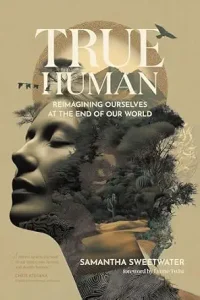
True Human: Reimagining Ourselves at the End of Our World
In this book, Samantha Sweetwater weaves philosophy, indigenous wisdom, ecological insight, psychedelic vision, and body-based practices to help you meet chaos and disruption as doorways to your deepest healing, fulfillment, and purpose.
In the Absence of the Ordinary – Francis Weller
In In the Absence of the Ordinary, Francis Weller reflects on living through a time of uncertainty, upheaval, and profound transition. Across 17 essays, he explores grief, soul, belonging, and our relationship with the natural world, inviting readers to cultivate new ways of being, relating, and caring for one another and the living Earth.
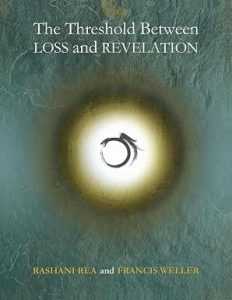
The Threshold Between Loss and Revelation
The Threshold Between Loss and Revelation brings together Rashani Réa’s visual art and Francis Weller’s reflections on grief, vulnerability, compassion, and the deeper wholeness that can emerge through suffering. Drawing on contemplative practices such as Tonglen, the book invites readers to meet personal and collective grief with greater spaciousness, reverence, and awareness.
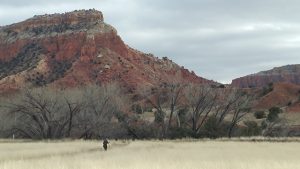
Learning to See in the Dark Amid Catastrophe: An Interview With Deep Ecologist Joanna Macy
In this interview with Dahr Jamail, Joanna Macy discusses how facing the reality of ecological and social crises can become a pathway toward deeper awareness, connection, and action. She reflects on the Work That Reconnects, the “Great Unraveling” and “Great Turning,” and the importance of moving through grief, fear, and uncertainty together rather than turning against one another.

One World in Dialogue
One World in Dialogue was created in 2015 by Elizabeth Debold with her partner Thomas Steininger as part of emerge bewusstseinskultur e.V., a German nonprofit educational association. The idea behind OWiD is simple: to develop a living global network of change-makers and activists committed to deep dialogue in order to create new approaches and collaborations that support change.
Craig Hamilton – Evolving Wisdom
Evolving Wisdom is a learning community focused on the evolution of human consciousness and culture. Craig Hamilton’s work brings together teachers, visionaries, and learners to explore personal and collective transformation and the development of new ways of being.
Resonance Path Institute – Spring Chen & Joe Shirley
Resonance Path Institute explores personal and collective transformation during a time of climate change, ecological disruption, and social upheaval. Its work focuses on developing new ways of seeing, being, and knowing while cultivating a deeper sense of wholeness and connection between body, mind, soul, and the wider Earth community.

Center for Humans and Nature
The Center for Humans and Nature seeks to dismantle cultural structures built on racism, White supremacy, and the exploitation of Black people, Indigenous people, and People of Color. Within the tangle of racism, inequality, violence, environmental degradation, toxic individualism, and unethical economics, we celebrate and affirm life-sustaining processes and relationships.

Astrobutterfly – “Age of Aquarius: The Next Chapter”
As long as the ego is separate from the soul, we won’t have freedom and progress (Aquarius’ higher manifestation) but instead will have division and will continue to attempt to use machines (weapons, robots, or the internet) to justify one side of the story – either “the ego” or “the soul”.
However, sooner or later, at the end of this ‘cosmic battle’, when we’ll reconcile the YING and the YANG, and we will eventually find a “new Renaissance” – or the triumph of Aquarius’ highest values: humanitarianism, knowledge, reason, innovation, and people who work towards a greater goal.

Loraine Van Tuyl – The Sacred Healing Well
The Sacred Healing Well explores personal and collective transformation through spirituality, consciousness, and the integration of seemingly opposing aspects of the self. Loraine Van Tuyl’s work envisions a shift away from hierarchical, top-down systems toward more egalitarian and collaborative ways of relating and living.
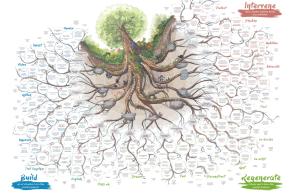
Roots of Resilience | Action Tree
Energy, climate, collapse, resilience… Now what?
More than 200 ways to get moving.
Everyone can find a way to act, in their own way. What’s your next step?
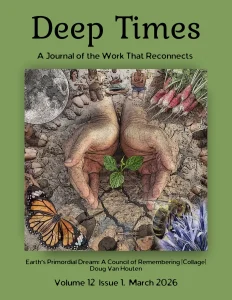
Deep Times Journal
Deep Times is a journal offering articles, art, and poetry rooted in the Work That Reconnects, which emphasizes interdependence within ecosystems and societies. It aims to foster life-sustaining, equitable cultures through inspiration drawn from reconnecting with ancestors and future generations, a concept termed “Deep Time” by Joanna Macy.
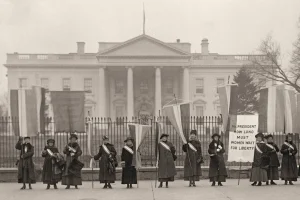
A Century of suffrage
This New York Times article marks the centennial of the ratification of the 19th Amendment and examines the long struggle for women’s voting rights in the United States. It highlights how Native American, Chinese American, and African American women continued to face barriers to voting after 1920, connecting the history of suffrage to the continuing struggle over voting access and political participation.

Full Transcript of Michelle Obama’s D.N.C. Speech
This New York Times article provides the full transcript of Michelle Obama’s keynote speech from the first night of the 2020 Democratic National Convention. In the speech, Obama reflects on American democracy, presidential leadership, injustice, civic participation, and the responsibilities of voters and leaders.
Love Sense, Dr. Sue Johnson
In Love Sense, Dr. Sue Johnson reveals the groundbreaking science behind romantic love, showing that it is an attachment bond as vital as the one between parent and child.
Hold Me Tight, Dr. Sue Johnson
Dr. Sue Johnson’s bestselling book, Hold Me Tight, continues to offer a groundbreaking approach to building stronger, more secure relationships. Grounded in Emotionally Focused Therapy (EFT), the book guides couples through seven pivotal conversations that foster emotional closeness, resolve conflicts, and create lasting bonds.

Michael Meade, Mosaic Voices
Join Michael Meade as he brings to life key themes from his new book The Heart of Transformation. Drawing from the realms of nature, depth psychology and mythology, Meade shows how transformation is the way of the world, the mystery at the heart of each person and possibly the only way out of the troubled times in which we live.
Wisdom of Trauma, Gabor Maté
In The Wisdom of Trauma, we travel alongside physician, bestselling author and Order of Canada recipient Dr. Gabor Maté to explore why our western society is facing such epidemics. This is a journey with a man who has dedicated his life to understanding the connection between illness, addiction, trauma and society.

The Zen Dog | Matt Beisner
Compassionate understanding helps people realize that dogs cannot change their nature, so we as enlightened humans need to accept them as they are. Zen Dog Training helps people learn to interact with their dogs in ways that improve communication. (Matt has acknowledged, in a personal communication, that most of his work is helping the humans change their behavior.)
Anna Breytenbach: Interspecies Communication
Anna Breytenbach explores humanity’s relationship with the living world and the possibility of communicating with other species. Drawing on her work with wildlife and conservation, she shares stories and perspectives on deepening our connection with animals and natural environments, while reflecting on Indigenous approaches to nature awareness.
Ancestral legacy of nature’s connections | Teresa Ryan
Teresa Ryan draws on her Tsimshian heritage and her work in fisheries science and natural resource conservation to explore Indigenous approaches to living with natural systems. She shares how ancestral knowledge of cyclical resource production and environmental variability can inform more sustainable approaches to managing fisheries and natural resources today.
How trees talk to each other | Suzanne Simard (TEDSummit)
Suzanne Simard shares her research on the “Wood Wide Web,” revealing how underground fungal networks connect trees and facilitate the exchange of carbon, water, nutrients, and chemical signals. She explains the important role of older “Mother Trees” in supporting younger seedlings and sustaining the health and resilience of forest communities.

Why do Trees Talk to Each Other?
Walk into any forest, and beneath your feet is an elaborate social network that helps make life on Earth possible. It’s called the “Wood Wide Web”, a massive and intricate network of fungi that exchange water, nutrients, and chemical signals with the plants they’re living in a symbiotic relationship with. This network of fungi is essential to the health and function of forests and to controlling climate change itself. You’re about to look at fungi in a whole new way!
The End of Patriarchy: Radical Feminism for Men by Robert Jensen
Does a socially just society require a radical feminist overhaul of dominant patriarchal structures? Dr. Robert Jensen is a professor of journalism at The University of Texas, Austin. He is the author of many books, and he writes opinions and analytics on foreign policy, politics, and race for popular media. His work has appeared in papers and magazines across the United States.
Once You Know – The Essential Climate Movie
An intimate journey across the abyss of a world at the edge of climate-induced collapse.

VOICE OF THE GODDESS: Awakening the Voice of the Goddess in Humanity
Shannon Port explores the possibility of bringing the Voice of the Goddess and the wisdom of the Divine Feminine back into the mainstream narrative. Drawing on intuition, inner knowing, humanity, and the Earth, she invites us to consider how the Goddess might be understood as a presence within all of us—and what it might mean to listen to that voice at this moment in human history.
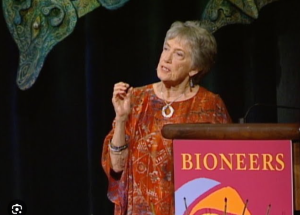
Joanna Macy with the Bioneers, November 12, 2021
Joanna Macy in her usual stellar form as she navigates the realm of true inspiration and aliveness, between being hopeless, and hopeful.

Spiral Journey
Spiral Journey offers international programs and facilitator development in the Work That Reconnects, supporting people in responding to the interconnected crises of climate disruption, systemic racism, oppression, war, and species extinction.

The Great Turning By Joanna Macy
Joanna Macy describes the “Great Turning” as the transition from an Industrial Growth Society to a life-sustaining civilization. She identifies three interconnected pathways for change: slowing ecological destruction, understanding and transforming the economic and political structures causing it, and creating new life-sustaining social and economic alternatives. The article frames the ecological crisis not simply as an environmental problem, but as a systemic transformation already underway.
David and Greta in Conversation: The Planetary Crisis | Wildscreen Festival 2020
The world’s greatest wildlife naturalist, David Attenborough, who’s still going so strong with himself even at 94 years of age, and the 17-year-old, Greta Thunberg who’s inspired an entire generation to join her movement against the climate crisis.

Nature Is Speaking – Shailene Woodley is Forest
Joan Chen, Lee Pace, Reese Witherspoon, Liam Neeson, Julia Roberts, Harrison Ford, Edward Norton, Penélope Cruz, Robert Redford, Ian Somerhalder and Lupita Nyong’o all join forces to give nature a voice.
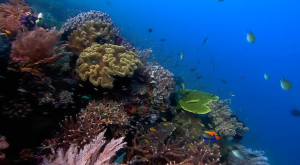
Nature Is Speaking – Ian Somerhalder is Coral Reef
Reese Witherspoon, Liam Neeson, Julia Roberts, Harrison Ford, Edward Norton, Penélope Cruz, Robert Redford, Ian Somerhalder and Lupita Nyong’o all join forces to give nature a voice.

Nature Is Speaking – Robert Redford is The Redwood
Reese Witherspoon, Liam Neeson, Julia Roberts, Harrison Ford, Edward Norton, Penélope Cruz, Robert Redford, Ian Somerhalder and Lupita Nyong’o all join forces to give nature a voice.
Nature Is Speaking – Lupita Nyong’o is Flower
Joan Chen, Lee Pace, Reese Witherspoon, Liam Neeson, Julia Roberts, Harrison Ford, Edward Norton, Penélope Cruz, Robert Redford, Ian Somerhalder and Lupita Nyong’o all join forces to give nature a voice.

Nature Is Speaking: Joan Chen is Sky
Joan Chen, Lee Pace, Reese Witherspoon, Liam Neeson, Julia Roberts, Harrison Ford, Edward Norton, Penélope Cruz, Robert Redford, Ian Somerhalder and Lupita Nyong’o all join forces to give nature a voice.
Nature Is Speaking – Edward Norton is The Soil
Reese Witherspoon, Liam Neeson, Julia Roberts, Harrison Ford, Edward Norton, Penélope Cruz, Robert Redford, Ian Somerhalder and Lupita Nyong’o all join forces to give nature a voice.

Nature Is Speaking – Penelope Cruz is Water
Reese Witherspoon, Liam Neeson, Julia Roberts, Harrison Ford, Edward Norton, Penélope Cruz, Robert Redford, Ian Somerhalder and Lupita Nyong’o all join forces to give nature a voice.
Nature Is Speaking – Reese Witherspoon is Home
Reese Witherspoon, Liam Neeson, Julia Roberts, Harrison Ford, Edward Norton, Penélope Cruz, Robert Redford, Ian Somerhalder and Lupita Nyong’o all join forces to give nature a voice.
Nature Is Speaking – Harrison Ford is The Ocean
Julia Roberts, Harrison Ford, Edward Norton, Penélope Cruz, Robert Redford and Ian Somerhalder all join forces to give nature a voice.
Jane Goodall – Mother Earth, April 22, 2017
Jane Goodall reflects on humanity’s relationship with the natural world, inviting us to recognize Earth not as a resource to exploit but as a living community to which we belong. Blending scientific insight with compassion and hope, she calls for a renewed sense of responsibility, interconnectedness, and care for all life.
Joanna Macy at Bioneers, November 12, 2021
Joanna Macy in her usual stellar form as she navigates the realm of true inspiration and aliveness, between being hopeless, and hopeful.
This is a clip from the Bioneers conference, further edited and produced by the wonderful team at Facing Future.

Actualize OS
With the many problems that humanity is now facing, have you been asking yourself, how you can rise to the challenge and be of greater service, at this critical moment in history? There is a growing awareness that we as a species are not living our lives at the level you know in your heart we are capable of.
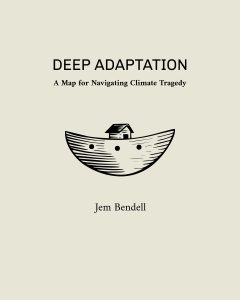
Deep Adaptation
Jem Bendell, co-editing with Rupert Read, brings together scholars, activists, and practitioners to explore how individuals and communities might respond to the realities of climate disruption and potential societal collapse. Grounded in the Deep Adaptation framework, the contributors examine grief, resilience, justice, and collective dialogue as foundations for navigating an uncertain future.
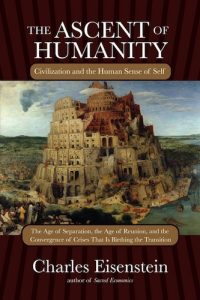
The Ascent of Humanity
The Ascent of Humanity is about the history and future of civilization from a unique perspective: the evolution of the human sense of self. This book describes how all the expressions of our civilization—its miraculous technology as well as the pillage of earth, culture, goodness, and beauty—arise from our identity, our way of being, “the discrete and separate self”. The gathering crises of our age demonstrate that this way of being is on the verge of collapse. And this collapse is setting the stage for a revolution in human beingness whose stirrings we already begin to feel.
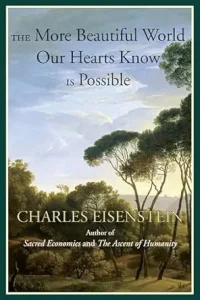
The More Beautiful World Our Heart Know is Possible
By Charles Eisenstein.
In a time of social and ecological crisis, what can we as individuals do to make the world a better place? This inspirational and thought-provoking book serves as an empowering antidote to the cynicism, frustration, paralysis, and overwhelm so many of us are feeling, replacing it with a grounding reminder of what’s true: we are all connected, and our small, personal choices bear unsuspected transformational power.
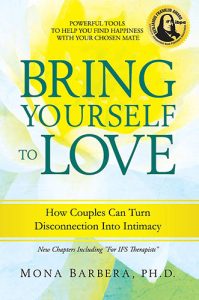
Bring Yourself to Love: How Couples Can Turn Disconnection Into Intimacy and Connection
Mona Barbera explores how couples can transform patterns of conflict and emotional disconnection into deeper intimacy. Through the practice of what she calls “giving better back,” she demonstrates how responding from vulnerability rather than reactivity can interrupt cycles of defensiveness, foster trust, and invite more open-hearted connection.
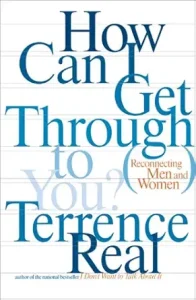
How Can I Get Through to You?: Closing the Intimacy Gap Between Men and Women
By Terrance Real
Taking a close-up look at gender roles and conditioning, the best-selling author of I Don’t Want to Talk About It explores the current status of intimate relations between men and women and introduces five Core Relationship Skills that couples can use to develop true intimacy. 100,000 first printing.
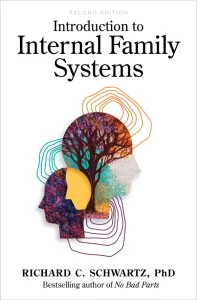
Introduction to Internal Family Systems
Richard C. Schwartz introduces Internal Family Systems (IFS), a therapeutic model that understands the mind as a community of distinct inner parts, each with its own role and purpose. Through compassion, curiosity, and Self-leadership, he shows how wounded parts can heal, allowing greater inner harmony, resilience, and authentic connection with ourselves and others.
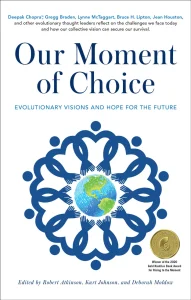
Our Moment of Choice: Evolutionary Visions and Hope for the Future
Edited by Robert Atkinson, Kurl Johnson and Deborah Moldow, this collection brings together forty-two thought leaders who explore humanity’s response to today’s intertwined ecological, social, and economic crises. United by a vision of conscious evolution, the contributors examine how inner transformation, collective purpose, and a growing awareness of our interconnectedness can help shape a more just, peaceful, and life-affirming future.
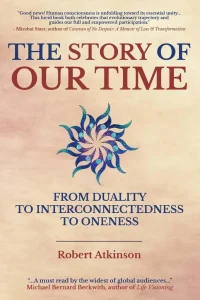
The Story of Our Time: From Duality to Interconnectedness to Oneness
Robert Atkinson traces humanity’s evolving story from separation and duality toward interconnectedness and oneness, drawing on the shared wisdom of the world’s spiritual traditions. He presents conscious evolution as an unfolding process that invites both personal transformation and collective participation in creating a more compassionate, unified, and life-affirming future.
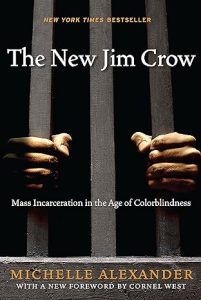
The New Jim Crow
Michelle Alexander argues that mass incarceration has become a new system of racial control in the United States, replacing overt segregation with policies that disproportionately target Black communities while maintaining the appearance of racial neutrality. Drawing on legal history and criminal justice research, she reveals how discrimination persists through institutions that deny millions full citizenship and equal rights.
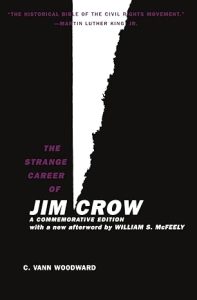
The Strange Career of Jim Crow
C. Vann Woodward examines the origins of the Jim Crow system, showing that racial segregation in the American South was not an enduring historical tradition but a relatively recent legal and political invention. His influential account reveals how laws and institutions created and sustained racial inequality, reshaping understandings of race, democracy, and justice in the United States.

Birth of a White Nation
Jacqueline Battalora traces the historical invention of “white people” as a legal and social category, revealing how race was constructed to establish and preserve systems of power and privilege. Drawing on colonial law and history, she examines the enduring legacy of whiteness and offers a framework for understanding—and dismantling—the structures that continue to shape racial inequality today.
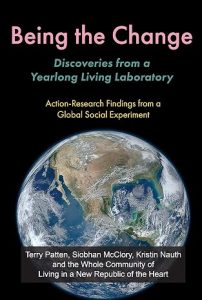
Being the Change: Discoveries from a Yearlong Living Laboratory
Terry Patten, Siobhan McClory, and Kristin Nauth document a year-long global experiment in collective transformation, sharing the practices, insights, and challenges of people learning to “be the change” together. Through action inquiry and intentional cultural evolution, they explore how inner development, authentic relationships, and collaborative action can help catalyze the profound societal changes our times demand.
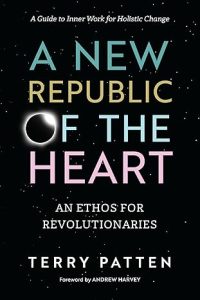
A New Republic of the Heart: An Ethos for Revolutionaries
Recasting current problems as emergent opportunities, Terry Patten offers creative responses, practices, and conscious conversations for tackling the profound inner and outer work we must do to build an integral future. In practical and personal terms, he discusses how we can all become active agents of a transformation of human civilization and why that is necessary to our continued survival. Patten’s narrative focuses on two aspects of existence–our dynamic but fractured and threatened world, and our underlying wholeness and unity. Only by honoring both of these realities simultaneously can we make sustainable changes in ourselves, our communities, our body politic, and our planetary life-support system.
Beyond unsustainable leadership: critical social theory for sustainable leadership
Bendell, J., Sutherland, N. and Little, R. (2017)
Drawing on critical social theory, this paper challenges conventional ideas of leadership and argues that meaningful responses to sustainability require a broader understanding of power, collective action, and social change. It lays the conceptual foundations for rethinking leadership as a shared and systemic practice rather than the work of exceptional individuals.
Democracy Demands a Richer Britain
Drawing on research into political participation and income inequality, Jem Bendell and Matthew Lopatin argue that economic disparity is eroding democratic life. They call for a broader public conversation about reshaping the economy so that prosperity, participation, and political stability are shared more equitably across society.

The Collapse of Ideology and the End of Escape
Reflecting on the deeper implications of climate-driven societal collapse, Jem Bendell examines the beliefs that shape modern culture—from certainty and control to progress and exceptionalism. He argues that meeting an uncertain future requires not only systemic change, but an inner willingness to question the assumptions that have long governed how we live, hope, and make meaning.
The study on collapse they thought you should not read – yet
Jem Bendell introduces the concept of Deep Adaptation, arguing that the prospect of climate-driven societal disruption calls not only for practical responses but for profound emotional and cultural reflection. Rather than encouraging despair, he invites an honest engagement with uncertainty, loss, and the possibilities for compassion, resilience, and meaningful action.
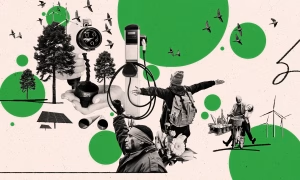
Ten ways to confront the climate crisis without losing hope
Rebecca Solnit argues that despair is neither inevitable nor useful in the face of the climate crisis. Drawing on examples of social movements, political change, and collective action, she reframes hope as an active practice—one that recognizes the power of ordinary people to challenge entrenched interests and help shape a more just and sustainable future.
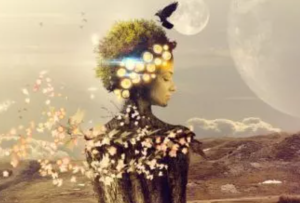
No Tree Knows Mystery – Drawing Parallels Between the Life of a Human and a Tree
Drawing on the life cycle of a tree, this reflection explores the parallels between human development and the natural world. Through themes of growth, resilience, change, loss, and renewal, it invites readers to recognize nature as a quiet teacher, offering insight into the rhythms and challenges of being human.

The World We Have
Thich Nhat Hanh reflects on the environmental crisis as a consequence of collective unconsciousness, urging a way of living rooted in mindfulness, compassion, and reverence for the Earth. Rather than seeking endless consumption, he invites us to awaken to our interdependence and embrace a vision of well-being grounded in simplicity, love, and shared responsibility.

Why a California oil workers union is getting behind clean energy
Challenging the assumption that organized labor and climate action are inherently at odds, this article examines a proposal for creating hundreds of thousands of clean energy jobs while supporting workers through the transition away from fossil fuels. It highlights the importance of pairing ambitious climate policy with economic security and a just transition for affected communities.
Using Traditional Ecological Knowledge as a Framework
Article reviewed and suggested by Tulika Monhan
This overview introduces Traditional Ecological Knowledge (TEK) as an evolving body of wisdom developed through generations of close relationship with the natural world. It explores how Indigenous knowledge has informed modern biology while offering enduring insights into biodiversity, conservation, and the interconnectedness of life.
Finding wisdom in science and Indigenous knowledge
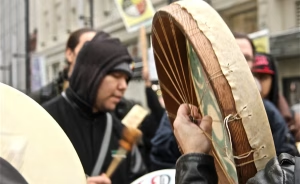
Reflecting on a lifetime in scientific research, David Suzuki explores both the strengths and limitations of science as a way of understanding the world. He argues that scientific inquiry is most meaningful when held alongside Indigenous knowledge, humility, and a deeper appreciation of the interconnectedness of life.
Urban Nature Experiences Reduce Stress in the Context of Daily Life Based on Salivary Biomarkers
Mary Carol R. Hunter, Brenda W. Gillespie, Sophie Yu-Pu Chen.
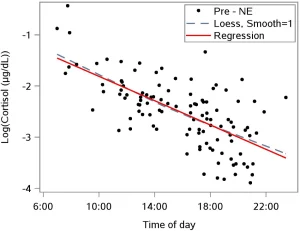
This study investigates how time spent in natural settings affects physiological markers of stress in everyday life. Measuring changes in salivary cortisol and alpha-amylase, the research provides evidence that even brief, regular experiences of nature can promote restoration and support physical and emotional well-being.
Tending the Wild
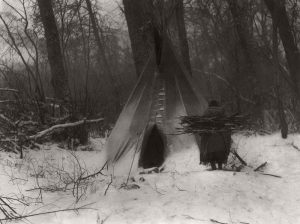
Drawing on Kat Anderson’s Tending the Wild, Charles Eisenstein challenges the enduring myth of untouched wilderness, revealing how Indigenous peoples actively cultivated and enriched the landscapes they inhabited. He invites a reconsideration of humanity’s role in nature—not as separate from the living world, but as participants capable of leaving a healing rather than destructive trace.
Beyond just Trump: The failures that led to the Capitol riots
Mike Bebernes, 2021,
Bringing together a range of perspectives, this article examines the political, cultural, and institutional failures that culminated in the January 6 attack on the U.S. Capitol. It considers the roles of extremist ideologies, media ecosystems, democratic erosion, and the enduring influence of white supremacy in shaping the events of that day.
Fallacies and Pitfalls in Psychology: Ethics, Critical Thinking & Language: Using Words to Deceive
Drawing on examples from psychotherapy, business, and public life, Kenneth S. Pope, Ph.D., and Melba J.T. Vasquez, Ph.D., examine how language can obscure ethical responsibility, conceal harm, and shape perception. The article invites readers to recognize the subtle ways words can distort accountability and interfere with critical thinking.
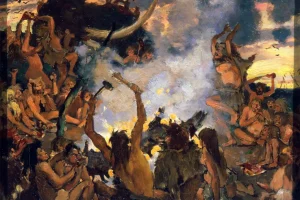
Men nearly caused human extinction 7,000 years ago, new theory states
Jamie Seidel, 2018
Revisiting the Neolithic Y chromosome bottleneck, this article explores the hypothesis that widespread conflict among male kin groups dramatically reduced male genetic diversity thousands of years ago. It considers how emerging patterns of violence, competition, and social organization may have shaped the development of early human societies.
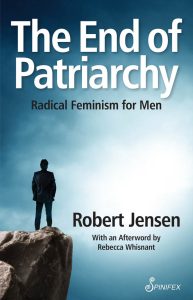
The End of Patriarchy: Radical Feminism for Men
The End of Patriarchy asks one key question: what do we need to create stable and decent human communities that can thrive in a sustainable relationship with the larger living world? Robert Jensen’s answer is feminism and a critique of patriarchy. He calls for a radical feminist challenge to institutionalized male dominance; an uncompromising rejection of men’s assertion of a right to control women’s sexuality; and a demand for an end to the violence and coercion that are at the heart of all systems of domination and subordination. The End of Patriarchy makes a powerful argument that a socially just society requires no less than a radical feminist overhaul of the dominant patriarchal structures.
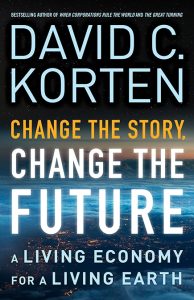
Change the Story, Change the Future: A Living Economy for a Living Earth
David C. Korten
Our current story is about Sacred Money and Markets. Money, it tells us, is the measure of all worth and the source of all happiness. The market is omniscient. Earth is simply a source of raw materials. Inequality and environmental destruction are unfortunate but unavoidable. Although many recognize this story promotes bad ethics, bad science, and bad economics, it will remain our guiding story until replaced by a more compelling story that aligns with our deepest understanding of the universe and our relationship to it.
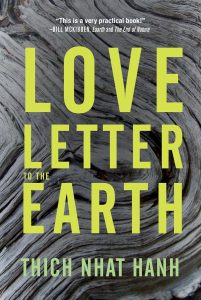
Love Letter to the Earth
Thict Nhat Hanh, 2013
While many experts point to the enormous complexity in addressing issues ranging from the destruction of ecosystems to the loss of millions of species, Thich Nhat Hanh identifies one key issue as having the potential to create a tipping point. He believes that we need to move beyond the concept of the “environment,” as it leads people to experience themselves and Earth as two separate entities and to see the planet only in terms of what it can do for them.
Here, Thich Nhat Hanh points to the lack of meaning and connection in peoples’ lives as being the cause of our addiction to consumerism. He deems it vital that we recognize and respond to the stress we are putting on the Earth if civilization is to survive. Rejecting the conventional economic approach, Thich Nhat Hanh shows that mindfulness and a spiritual revolution are needed to protect nature and limit climate change.

Shinrin Yoku: The Japanese Art of Forest Bathing
By Yoshifumi Miyazaki
Shinrin-yoku is the Japanese practice of seeking a deeper connection with nature by spending intentional time surrounded by trees. Commonly referred to as forest bathing, the meditative practice involves all of our senses and has extraordinary effects on health and happiness. In Shinrin Yoku, Yoshifumi Miyazaki explains the science behind forest bathing and explores the many health benefits, including reduced stress, lower blood pressure, improved mood, and increased focus and energy. This useful guide also teaches you how to bring the benefits of the forest into the home through the use of essential oils, cypress baths, flower therapy, and bonsai. Whether you are exploring a city park, a woodland area, or even the trees in your own backyard, Shinrin Yoku will help you detox from the stress of modern life by opening your eyes to the healing power of trees.
The Healing Magic of Forest Bathing: Finding Calm, Creativity, and Connection in the Natural World
By Julia Plevin
An engaging guide to the art of forest bathing, inspired by the Japanese practice of shinrin-yoku, for anyone who wants to explore the transformative power of nature in promoting health and happiness.
Forest bathing is the art of spending intentional time in nature and is practiced throughout the world to increase health and restore well-being. More and more people are turning to forest bathing as an evidence-based way to unplug, relieve stress and anxiety, and spark creativity.
Indigenous Community: Rekindling the Teachings of the Seventh Fire
In his book, Indigenous Community, Dr. Cajete takes up the question: What kind of ways of teaching and learning do Indigenous peoples need to revitalize, maintain, and sustain Indigenous Community in the 21st century and beyond? He considers:
• the changes in the nature of Indigenous community that have occurred because of colonization;
• the present state of Indigenous community;
• how to create an educational context for renewing and revitalizing Indigenous community;
• case studies of how community-based educational planning has brought community renewal;
• the role of community-based research for renewal and sustainability; and more.
The Politics of Waking Up: Power & Possibility In The Fractal Age
By Indra Adnan
Everyone thinks they know what it means to be “woke”, whether they’re proudly declaring it, or angrily attacking it.
But writer, political entrepreneur and psychosocial therapist Indra Adnan has written a comprehensive and necessary account of “waking up” – to the realities of the climate crisis, social breakdown, and personal agency – which implicates us all. In the internet era, no-one escapes the global revolution of learning, connecting and mobilising and its entangled consequences.
Traditional Ecological Knowledge: Learning from Indigenous Practices for Environmental Sustainability (New Directions in Sustainability and Society)
Melissa K. Nelson and Daniel Shilling (Editors)
This book examines the importance of Traditional Ecological Knowledge (TEK) and how it can provide models for a time-tested form of sustainability needed in the world today. The essays, written by a team of scholars from diverse disciplinary backgrounds, explore TEK through compelling cases of environmental sustainability from multiple tribal and geographic locations in North America and beyond. Addressing the philosophical issues concerning indigenous and ecological knowledge production and maintenance, they focus on how environmental values and ethics are applied to the uses of land.Grounded in an understanding of the profound relationship between biological and cultural diversity, this book defines, interrogates, and problematizes, the many definitions of traditional ecological knowledge and sustainability. It includes a holistic and broad disciplinary approach to sustainability, including language, art, and ceremony, as critical ways to maintain healthy human-environment relations.
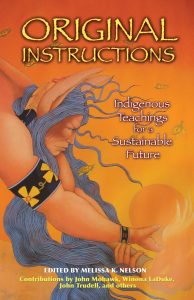
Original Instructions: Indigenous Teachings for a Sustainable Future
Melissa K. Nelson (Editor), 2008
For millennia the world’s indigenous peoples have acted as guardians of the web of life for the next seven generations. They’ve successfully managed complex reciprocal relationships between biological and cultural diversity. Awareness of indigenous knowledge is reemerging at the eleventh hour to help avert global ecological and social collapse. Indigenous cultural wisdom shows us how to live in peace–with the earth and one another.
Original Instructions evokes the rich indigenous storytelling tradition in this collection of presentations gathered from the annual Bioneers conference. It depicts how the world’s native leaders and scholars are safeguarding the original instructions, reminding us about gratitude, kinship, and a reverence for community and creation. Included are more than 20 contemporary indigenous leaders–such as Chief Oren Lyons, John Mohawk, Winona LaDuke, and John Trudell. These beautiful, wise voices remind us where hope lies.
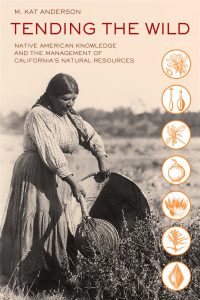
Tending the Wild
By M. KAT ANDERSON
A complex look at California Native ecological practices as a model for environmental sustainability and conservation.
John Muir was an early proponent of a view we still hold today—that much of California was pristine, untouched wilderness before the arrival of Europeans. But as this groundbreaking book demonstrates, what Muir was really seeing when he admired the grand vistas of Yosemite and the gold and purple flowers carpeting the Central Valley were the fertile gardens of the Sierra Miwok and Valley Yokuts Indians, modified and made productive by centuries of harvesting, tilling, sowing, pruning, and burning. Marvelously detailed and beautifully written, Tending the Wild is an unparalleled examination of Native American knowledge and uses of California’s natural resources that reshapes our understanding of native cultures and shows how we might begin to use their knowledge in our own conservation efforts.
Deep Adaptation: A Map for Navigating Climate Tragedy
By Jem Bendell
This paper is not the venue for a detailed examination of all the latest climate science. However, I reviewed the scientific literature from the past few years and where there was still large uncertainty then sought the latest data from research institutes. In this section I summarize the findings to establish the premise that it is time we consider the implications of it being too late to avert a global environmental catastrophe in the lifetimes of people alive today.
It is a truism that we do not know what the future will be. But we can see trends. We do not know if the power of human ingenuity will help sufficiently to change the environmental trajectory we are on. Unfortunately, the recent years of innovation, investment and patenting indicate how human ingenuity has increasingly been channeled into consumerism and financial engineering. We might pray for time. But the evidence before us suggests that we are set for disruptive and probably uncontrollable levels of climate change, bringing starvation, destruction, migration, disease and war (Servigne and Stevens, 2020).

Ancient code: How Trees Talk to one another
Today, scientists are confirming that forests act like one big superorganism. Below the ground, fungal highways connect the trees. Through this highway, the oldest trees nurture their young. What’s more, the trees communicate and cooperate with other species. Thus, they may help each other, contrasting with the idea of selfish competition.
Global Challenges Are Directing Us Toward a Unity of Purpose
Kurt Johnson, Elena Mustakova, Robert Atkinson, 2021
Living by a consciousness of wholeness prioritizes the whole, engenders a response based on harmony and cooperation, and places a unity of purpose above all else. At the same time, a consciousness of wholeness acknowledges our diversity of views, appearances, and contributions to the whole as our sustaining strength.
This consciousness calls for a complete shift in how we relate to reality. Seeing beyond the illusion of separation allows us to focus on the one reality which is already a unified whole. Anything currently dividing us is also a catalyst for uniting us. We saw this last summer when the streets filled with people calling for racial justice and deep systemic change. A convergence of forces is building like never before. As we join hands across differences, we seek to heal a great divide in the human family.

Social Evolution in Summary with Context
Miki Kashtan, 2019
The underlying principle of patriarchy, as I understand it, is separation and control. The separation is from self, other, life, and nature. The fundamental structures we have created over these millennia are based on dominance and submission, and the worldview we have inherited justifies them as necessary to overcome both our basic nature and “Nature”, seen as separate from us.
We pride self-control and frown on “emotionality”; we operate, organizationally, in command and control forms; we have been treating nature as a thing to exploit, use, subdue, and, most recently, convert to commodities for sale.

Dismantling the Patriarchy Within
Anne Baring and Faranak Mirjalili, 2021
We sat down to speak about the feminine psyche, both individually and collectively, and we also sat down to discuss the challenges that we are facing in this time. If we are to survive as a human species, and most importantly as a whole earth species, we need to come into a better understanding and balance between the feminine and masculine principles. Both these principles need to be equally honored, respected and lived.
But what does this really mean when patriarchy has reigned for more than 4,000 years. How do we know what our feminine qualities are and what does it even mean to be a woman in a time of global climate catastrophe? Are we doing enough as women to stand up against tyrannical political leaders? Is it enough to stand up in protest and even to say no to that which we no longer accept? Are we doing enough to dismantle patriarchy through our outer actions?
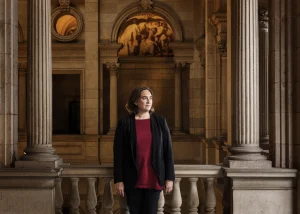
Barcelona’s Experiment in Radical Democracy
By Masha Gessen, 2018, (In the online New Yorker, 8/6/18)
The municipalist agenda is intentionally broad; it’s based, as Pin puts it, on common goals rather than differences.
As the name makes clear, Barcelona en Comú is focused on the commons. Colau speaks of the importance of public space often and articulately. “Public space is the place, par excellence, for democracy: this space that belongs to all of us,” she told me. “Therefore, this is also the space of the most vulnerable people, which is what democratic systems should prioritize: the people who have fewer opportunities. If you have little private space, you have more public space and public services—libraries, beaches, parks. It is the space to meet with others, but also it’s a space where you can be who you want to be—this is the space for freedom.
And, therefore, it is a space where you can build up the city with others. So, from that point of view, the more public space there is, and the better its quality, the better the quality of the democracy.”

Declaration of Interdependence
By David Suzuki, 1992.
The Declaration of Interdependence, written in 1992, for the UN Earth Summit, powerfully expresses the intimate undeniable connections amongst humans and the earth itself, undeniable connections between humans and other species, and passionately appeals to humans to honor this interdependence, to move beyond our greed and arrogance.
The final lines state: “At this turning point in our relationship with Earth, we work for an evolution: from dominance to partnership; from fragmentation to connection.” As humans, we still have not heeded that call. We still have not sufficiently changed in our ways, but his powerful words deserve repeating.
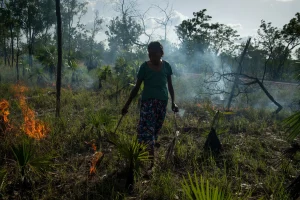
Native Solutions to Big Fires
Native practices of controlled burns (also practiced by indigenous folk in Australia and India) were banned under settler colonialism, but the rise in uncontrolled fires is making officials revisit more traditional methods of conservation
Article reviewed and suggested by Tulika Monhan

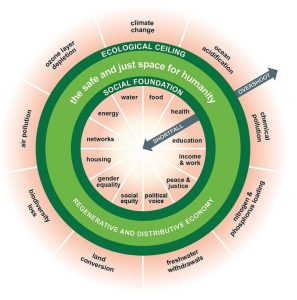
The Wisdom of Our Ancestors
By David Korten.
From the surviving early cultures of Africa, the human birthplace, comes a foundational insight into life and our distinctive human nature and responsibility. It goes by different names in different places. It is perhaps best known by non-Africans as ubuntu, which translates: “I am because you are.”
In its fullest meaning, ubuntu acknowledges the individual’s dependence on the whole of life: “I am because we are.” The Ubuntu Principle takes it the next step to its simple, yet profound, implication: “I do best when we all do well.” It leads us from asking, “How can I make a difference?” to “How can we make a difference?”
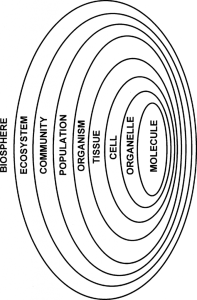
Indigenous to Life
By Daniel Christian Wahl.
What if we focused on being differently now? What if we re-perceived who we are and identified more with life as a planetary process of interbeing? What if we aimed for being in right relationship to self, community and life? What if we focused on our individual and collective potential of being and becoming healing and nurturing expressions of place?

Deschooling Dialogues: On Initiation, Trauma and Ritual with Francis Weller
Can we get there? Back to community, to connection, art, imagination, mutual engagement? We either heal communally or we don’t. As far as what we’re going through right now, we’re watching the historic trauma unfold, and the reactions to trauma, which are panic, terror, exaggerated expressions of masculinity in its grossest form. And we’re also seeing a heightened and quickened sense of compassion.
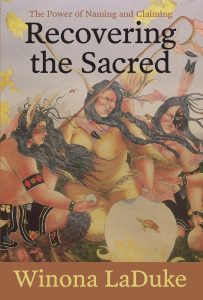
Recovering the Sacred: The Power of Naming and Claiming
By Winona LaDuke.
The indigenous imperative to honor nature is undermined by federal laws approving resource extraction through mining and drilling. Formal protections exist for Native American religious expression, but not for the places and natural resources integral to ceremonies. Under what conditions can traditional beliefs be best practiced?
Recovering the Sacred features a wealth of native research and hundreds of interviews with indigenous scholars and activists.
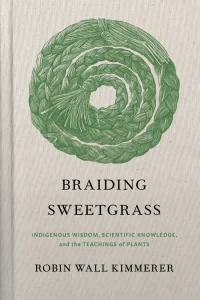
Braiding Sweetgrass: Indigenous Wisdom, Scientific Knowledge and the Teachings of Plants
By Robin Wall Kimmerer.
Drawing on her life as an indigenous scientist, a mother, and a woman, Kimmerer shows how other living beings—asters and goldenrod, strawberries and squash, salamanders, algae, and sweetgrass—offer us gifts and lessons, even if we’ve forgotten how to hear their voices. In a rich braid of reflections that range from the creation of Turtle Island to the forces that threaten its flourishing today, she circles toward a central argument: that the awakening of a wider ecological consciousness requires the acknowledgment and celebration of our reciprocal relationship with the rest of the living world. For only when we can hear the languages of other beings will we be capable of understanding the generosity of the earth, and learn to give our own gifts in return.
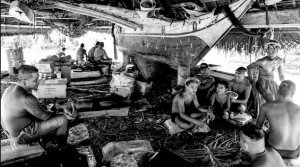
To Hell with Drowning
Julian Aguon, The Atlantic, 2021
In Fiji (as in many of our islands), the people are tethered to the earth, as enshrined in the concept of vanua, a word that means “the land” and “the people” at once. Vunidogoloans live and love and die on their lands, most of which they do not even own, at least not as individuals. Rather, theirs is a system of communal land ownership. They tend to their gardens. They bury their dead. They even bury their umbilical cords. So it was no surprise when, as about 30 families set out for the new site, some of the older women wailed as they walked.

The Descent to Soul
Bill Plotkin, 2021,
I believe the root cause of the dire crises and challenges of our time — all of our currently cascading environmental and cultural collapses — is a widespread failure in individual human development. This has been true for so long and in so many societies that most people today (including most psychologists, educators, and religious leaders) are unaware of this breakdown in the natural sequence of human maturation, a failure now plainly evident — as witnessed in the current epidemics of psychological dysfunction as well as social and ecological degradation. Vital threads in growing whole are missing from the cultural fabric. Too many of us are only troubled guests on this Earth.

Covid has Traumatized America: A Doctor Explains What we need to heal
David Marchese, 2021, Dr. Diane E. Meier Interview,
It has to do with trauma. Trauma is widespread. In wealthy families and poor families; individual and family trauma; community trauma and societal trauma. We have so much of that here — just start with racism and go on. It is repressed and treated with denial. That doesn’t make it go away.
It’s controlling how people respond to new trauma, whether it’s a diagnosis or a pandemic or a January 6th. So my perspective on trauma has a bigger scale than it used to — a species-level and tribal-level scale

The Origins of Fatherhood: An Ancient Family Process
By Sebastian Kraemer
Despite appearances to the contrary (fostered by anthropocentric nursery stories), a distinct role for male parents does not exist in nature. Fatherhood was invented by humans during the agricultural revolution about six thousand years ago. Symbolized by the new god-king, it incorporated the mother’s originally superior role in primate families – the control or ownership of children. The male deity could even make his own offspring without female help.
This inflated political figure was designed to compensate for the male’s modest role in procreation, once the facts of life were known. Patriarchy was born out of an envious attack on mothers.

