


Intrapersonally

An exploration of how to find our way back to nature, to each other, and to ourselves so that we may find our right place in the Universe.

Finding Right Balance

Within ourselves

Sometimes we humans forget that we are part of Nature...

As with other aspects of Nature, there seems to be an inherent “balance” that can be optimal in order for humans to be –or to become– our “best selves.” For plants (depending upon the species) there is an optimal balance of sun and shade, of rain, of minerals in the soil – factors that facilitate the plant becoming its optimal self.

Humans forget that the same is true for us. There is an “ideal” balance that facilitates our being or becoming our best selves.


Many of the necessary factors seem to have been forgotten over the course of history. 

Once upon a time, we were in better harmony with Nature. We were more integrated into community; we had a sense of “belonging.” 

Caring for others and for the common welfare served us better than what we have evolved into.

Humans forget that the same is true for us. There is an “ideal” balance that facilitates our being or becoming our best selves.

Finding right balance within oneself is a matter of tuning into various aspects of our lives, and “listening” with all our senses, to what feels right energetically, what feels right personally, interpersonally, physically, mentally, emotionally, spiritually…

  • How do we tell if work and play are in “right balance”?
  • How do we tell if giving and taking are in “right balance”?
  • What cues and clues do we get that we are out of “right balance”?
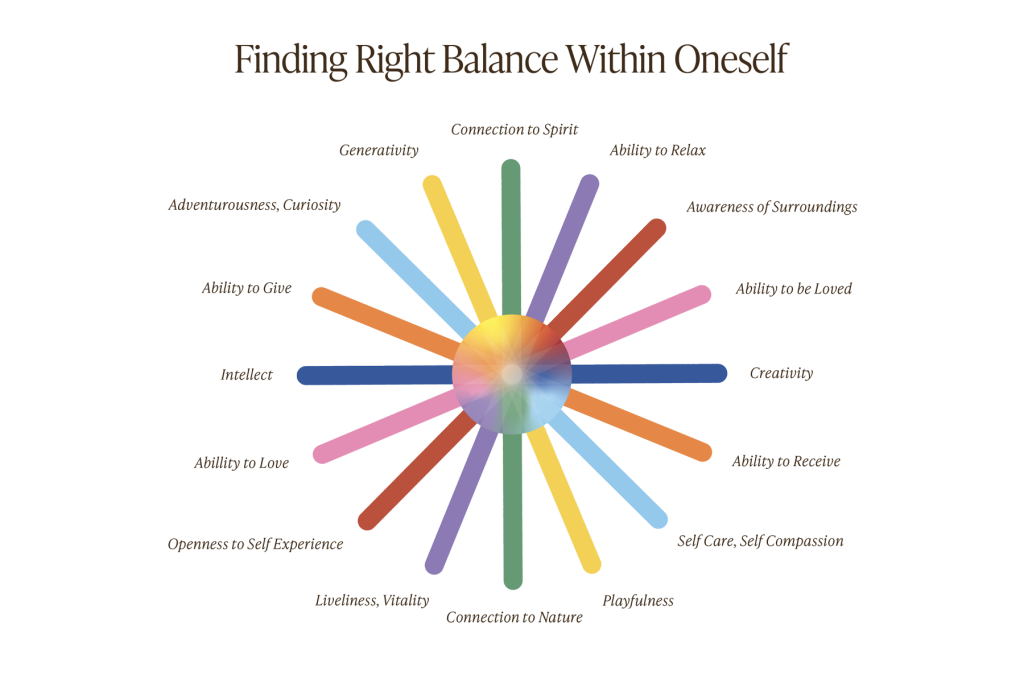
  • What are the component energies or polarities that we ask ourselves about?

FINDING RIGHT BALANCE

Finding right balance within oneself is a matter of our tuning in to various aspects of our lives, and “listening” with all our senses, to what feels right energetically, what feels right personally, interpersonally, physically, mentally, emotionally, spiritually…

FRAMEWORK

Model Of Wholeness

The factors in the model below are just some one the ones that I have thought about.
Which are the important variables for each individual to be attentive to? And how do we learn to attend?

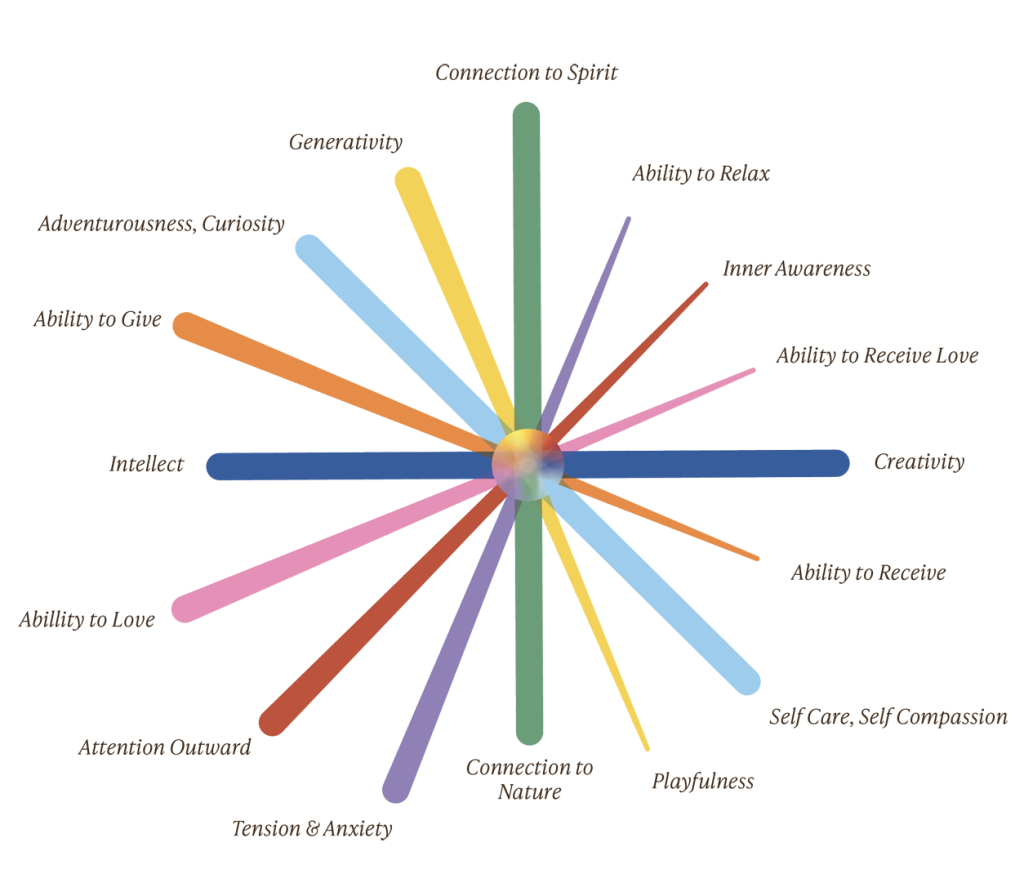
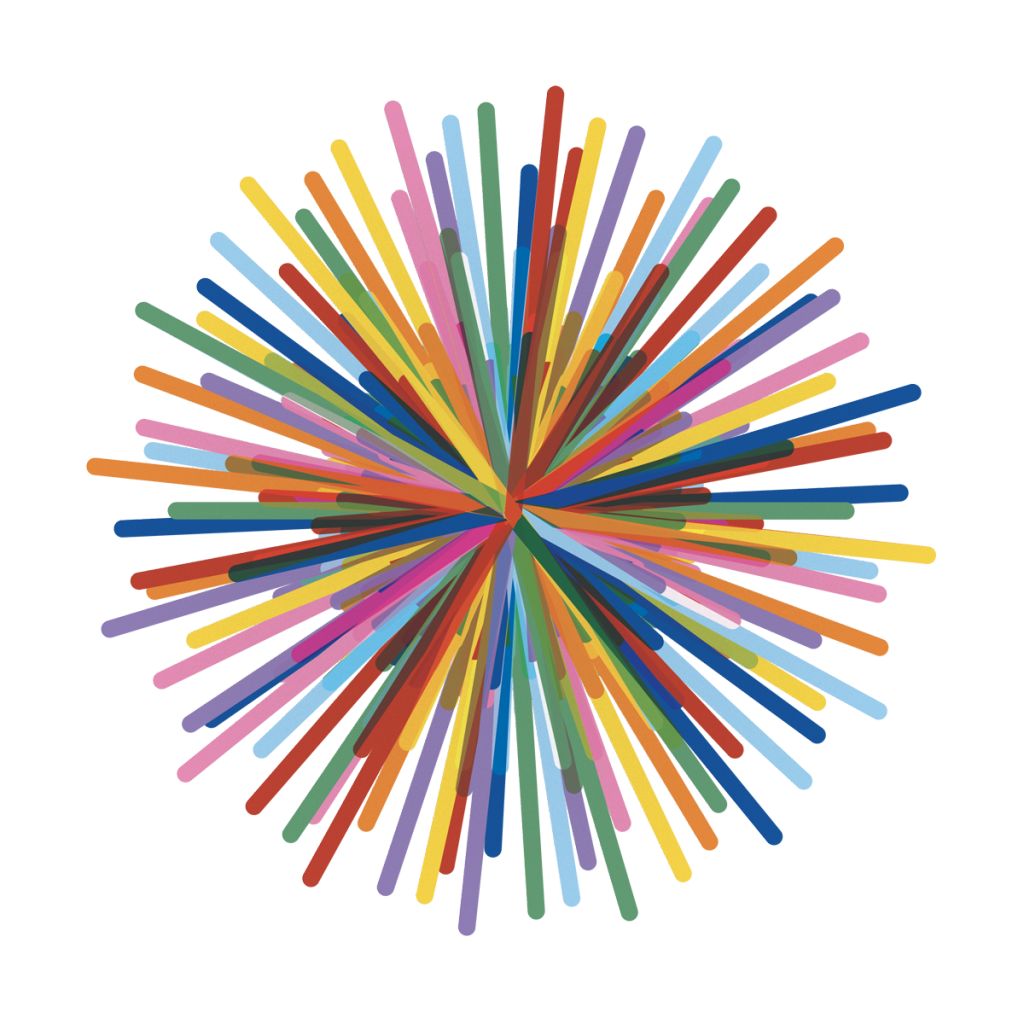
In this second image, one can notice that certain spokes are 
longer, others are shorter.

For instance, in this example, you can notice this person learned to put their attention outward. They over-developed the need to give love and attention to somebody else, making their attention to themselves much less available. You’ll also notice in this example the over-development of work rather than play, and under-development of the ability to relax. 

In order to get into right balance, this person will need to challenge and work through what was necessary in their family of origin.

ABout

Finding our way back to balance…

Realistically we humans are not always completely evenly matched in every area, but we can at least become more conscious – and think about what right balance might mean. And think about the implications of NOT being in “right balance”…

What are the consequences if we give too much? Give too little? Ignore our creative needs? Ignore our connection with nature?

What if we turn out to be giving for the wrong reasons? Blocked from receiving even more than we are aware? Don’t we risk depleting ourselves?

What if we surge toward adventurousness but do not engage in sufficient self-care, are we putting ourselves at unnecessary risk?

What if our attention is too much outward and not engaged enough in inner self-reflection or self-awareness, doesn’t that also risk self-depletion?

This website is largely about restoring the right balance between humans and Mother Earth, between humans and other species, and between and amongst one another.


There are many aspects involved in the exploration to find what is our “right” balance. An internal exploration – it seems to me – needs to come first, which is why this section of the website comes first.

If we imagine humans as having various traits, endeavors, or various capacities – some of these occur in polarities and require attention to balance.

  • How much are we open to giving?
  • How much are we open to receiving?
  • What is the optimal balance within each of us and with regard to our environment?
  • How much of our attention goes outward?
  • How much do we need to cast some attention inward?
  • Be aware of our emotions, be aware of our motives, be aware of our internal processes?

Too much or too little in either direction can throw us off balance. How much energy do we expend in work? In play? In creativity? In Nature? How much of our time is with community and how much in solitude?

My assertion is that – as thinking beings- it is our responsibility to attend to these areas of balance and imbalance.

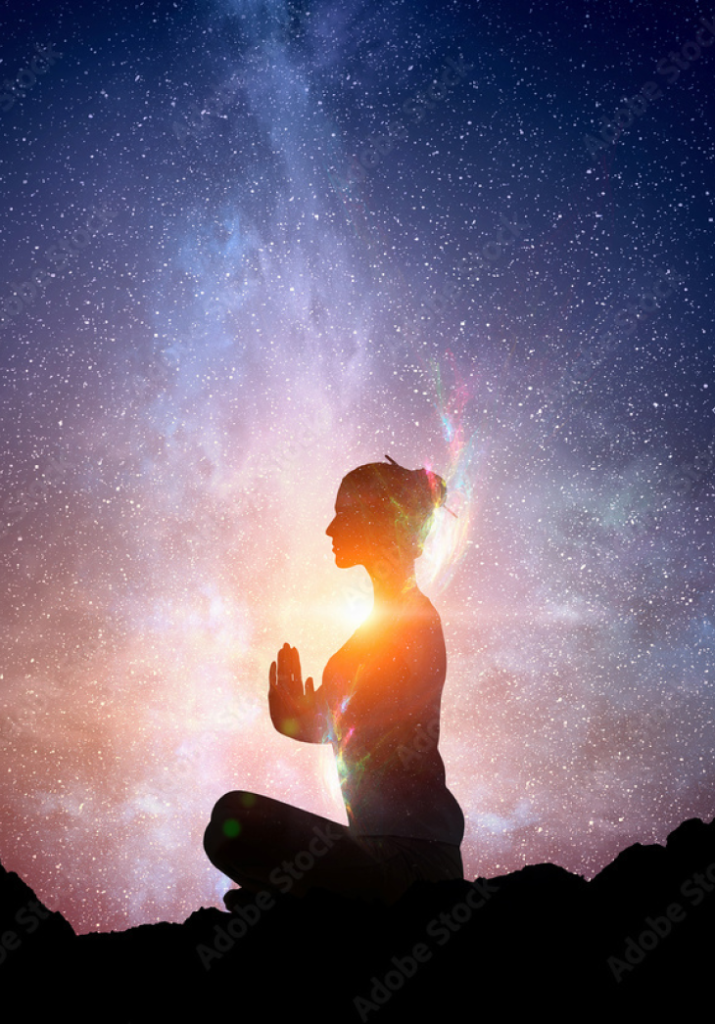
In actuality, although the images above are two-dimensional, we are really three-dimensional. We might conceptualize ourselves more like this:

ABout

Internal Family Systems

Internal family systems therapy conceptualizes us as being made up of parts. (Richard Schwartz, and others, see below.) These parts can often be in polarities with opposite ways of being (as suggested in my diagrams above) or can operate independently from one another.

Internal family systems therapy is one methodology we can use to get to better know and understand our component parts, and to come to understand whether or not we are in the “optimal” balance for our own highest functioning, and to function in our “best balance” with others.

Leadership.Schwartz, R.C. (1995). Internal family systems therapy. New York, NY: Guilford Press. Published in paperback in 1997.Schwartz, R.C. & Sweezy, M. (2020). Internal Family Systems Therapy (2nd ed.). New York NY: Guilford Press.

ResEARCH & Resources

Explore our Library

We have been immersed in a deep inquiry for almost two decades. We have lovingly curated a living library of books, articles, videos, podcasts, blogs, websites, white papers, and more. Our hope and intention is that any one visiting this site is able to deepen their inquiry into these important questions, and easily connect to the landscape of thought leaders, research, and conversations happening around the world…

By Topic Areas

Patriarchy, White Supremacy, etc…

By Content Type

Blog Posts, Podcasts, Videos, etc…

“It seems (to me) that we have done a lot of harm thus far, to the planet, to the resources that were held in Mother Earth, to other species, and if we do not MAJORLY turn our beliefs and our behaviors around, life as we have known it will be over.”

DEBORAH BRENNER-LISS

blog

Continue Exploring

Explore more resources and information about Finding Right Balance intrapersonally…

52. Wetiko

Wetiko is a contagious psycho-spiritual disease of the soul, a parasite of the mind, that is currently being acted out en masse via an insidious collective psychosis of titanic proportions. This mind-virus covertly operates through the unconscious blind spots in the human psyche, rendering people oblivious to their own madness.

Read More »

48. New Republic of the Heart, Terry Patten

Between 2018 and the present time, The New Republic of the Heart has brought together people and communities to address our urgent global challenges by doing the inner work of personal transformation AND the outer work of civic engagement.

Read More »

45. Wisdom of Trauma, Gabor Maté, Thomas Hübl

Trauma is the invisible force that shapes our lives. It shapes the way we live, the way we love and the way we make sense of the world. It is the root of our deepest wounds. Dr. Maté gives us a new vision: a trauma-informed society in which parents, teachers, physicians, policy-makers and legal personnel seek to understand the sources from which troubling behaviors and diseases spring in the wounded human soul, rather than focusing on fixing behaviors, suppressing symptoms and judging.

Read More »