
The World We Have

Thich Nhat Hanh reflects on the environmental crisis as a consequence of collective unconsciousness, urging a way of living rooted in mindfulness, compassion, and reverence for the Earth. Rather than seeking endless consumption, he invites us to awaken to our interdependence and embrace a vision of well-being grounded in simplicity, love, and shared responsibility.
Tending the Wild
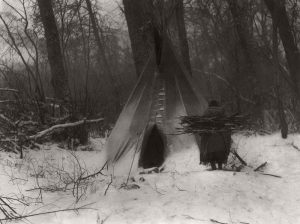
Drawing on Kat Anderson’s Tending the Wild, Charles Eisenstein challenges the enduring myth of untouched wilderness, revealing how Indigenous peoples actively cultivated and enriched the landscapes they inhabited. He invites a reconsideration of humanity’s role in nature—not as separate from the living world, but as participants capable of leaving a healing rather than destructive trace.
Fallacies and Pitfalls in Psychology: Ethics, Critical Thinking & Language: Using Words to Deceive
Drawing on examples from psychotherapy, business, and public life, Kenneth S. Pope, Ph.D., and Melba J.T. Vasquez, Ph.D., examine how language can obscure ethical responsibility, conceal harm, and shape perception. The article invites readers to recognize the subtle ways words can distort accountability and interfere with critical thinking.
The End of Patriarchy: Radical Feminism for Men
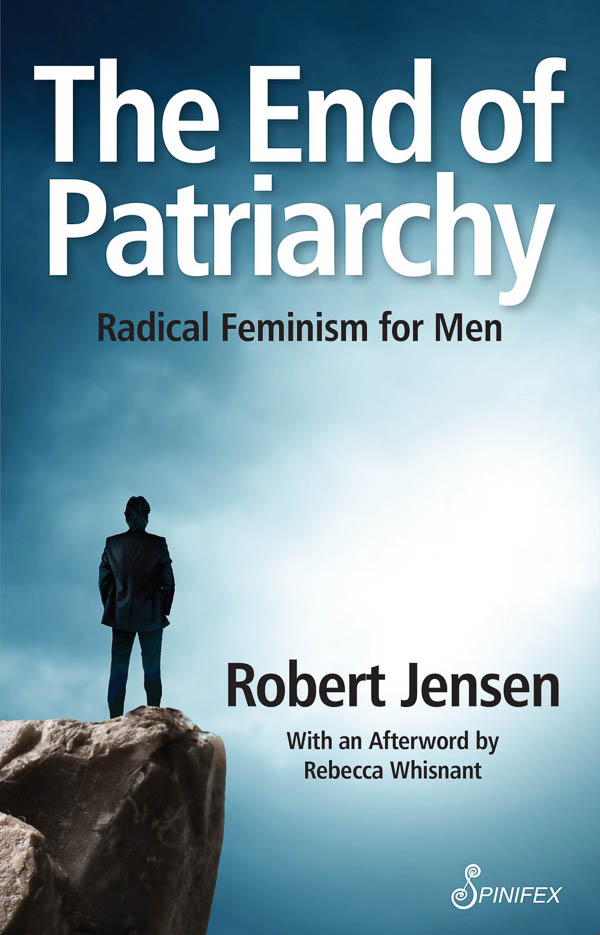
The End of Patriarchy asks one key question: what do we need to create stable and decent human communities that can thrive in a sustainable relationship with the larger living world? Robert Jensen’s answer is feminism and a critique of patriarchy. He calls for a radical feminist challenge to institutionalized male dominance; an uncompromising rejection of men’s assertion of a right to control women’s sexuality; and a demand for an end to the violence and coercion that are at the heart of all systems of domination and subordination. The End of Patriarchy makes a powerful argument that a socially just society requires no less than a radical feminist overhaul of the dominant patriarchal structures.
Indigenous Community: Rekindling the Teachings of the Seventh Fire

In his book, Indigenous Community, Dr. Cajete takes up the question: What kind of ways of teaching and learning do Indigenous peoples need to revitalize, maintain, and sustain Indigenous Community in the 21st century and beyond? He considers:
• the changes in the nature of Indigenous community that have occurred because of colonization;
• the present state of Indigenous community;
• how to create an educational context for renewing and revitalizing Indigenous community;
• case studies of how community-based educational planning has brought community renewal;
• the role of community-based research for renewal and sustainability; and more.
Original Instructions: Indigenous Teachings for a Sustainable Future
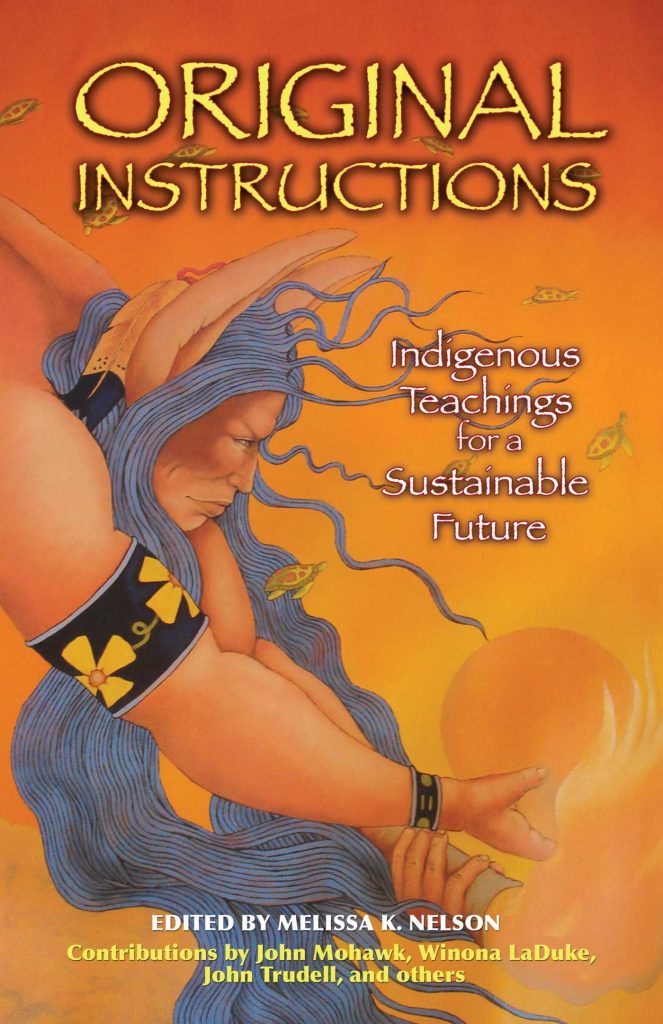
Melissa K. Nelson (Editor), 2008
For millennia the world’s indigenous peoples have acted as guardians of the web of life for the next seven generations. They’ve successfully managed complex reciprocal relationships between biological and cultural diversity. Awareness of indigenous knowledge is reemerging at the eleventh hour to help avert global ecological and social collapse. Indigenous cultural wisdom shows us how to live in peace–with the earth and one another.
Original Instructions evokes the rich indigenous storytelling tradition in this collection of presentations gathered from the annual Bioneers conference. It depicts how the world’s native leaders and scholars are safeguarding the original instructions, reminding us about gratitude, kinship, and a reverence for community and creation. Included are more than 20 contemporary indigenous leaders–such as Chief Oren Lyons, John Mohawk, Winona LaDuke, and John Trudell. These beautiful, wise voices remind us where hope lies.
Global Challenges Are Directing Us Toward a Unity of Purpose
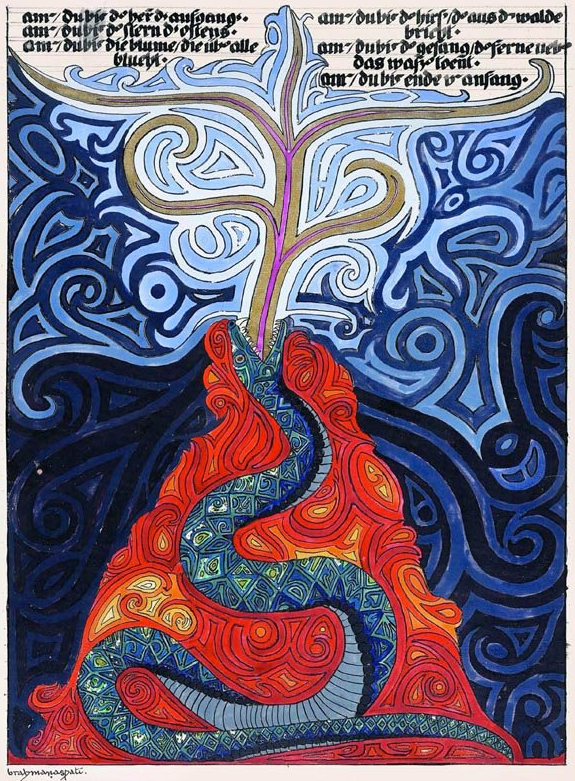
Kurt Johnson, Elena Mustakova, Robert Atkinson, 2021
Living by a consciousness of wholeness prioritizes the whole, engenders a response based on harmony and cooperation, and places a unity of purpose above all else. At the same time, a consciousness of wholeness acknowledges our diversity of views, appearances, and contributions to the whole as our sustaining strength.
This consciousness calls for a complete shift in how we relate to reality. Seeing beyond the illusion of separation allows us to focus on the one reality which is already a unified whole. Anything currently dividing us is also a catalyst for uniting us. We saw this last summer when the streets filled with people calling for racial justice and deep systemic change. A convergence of forces is building like never before. As we join hands across differences, we seek to heal a great divide in the human family.
Barcelona’s Experiment in Radical Democracy
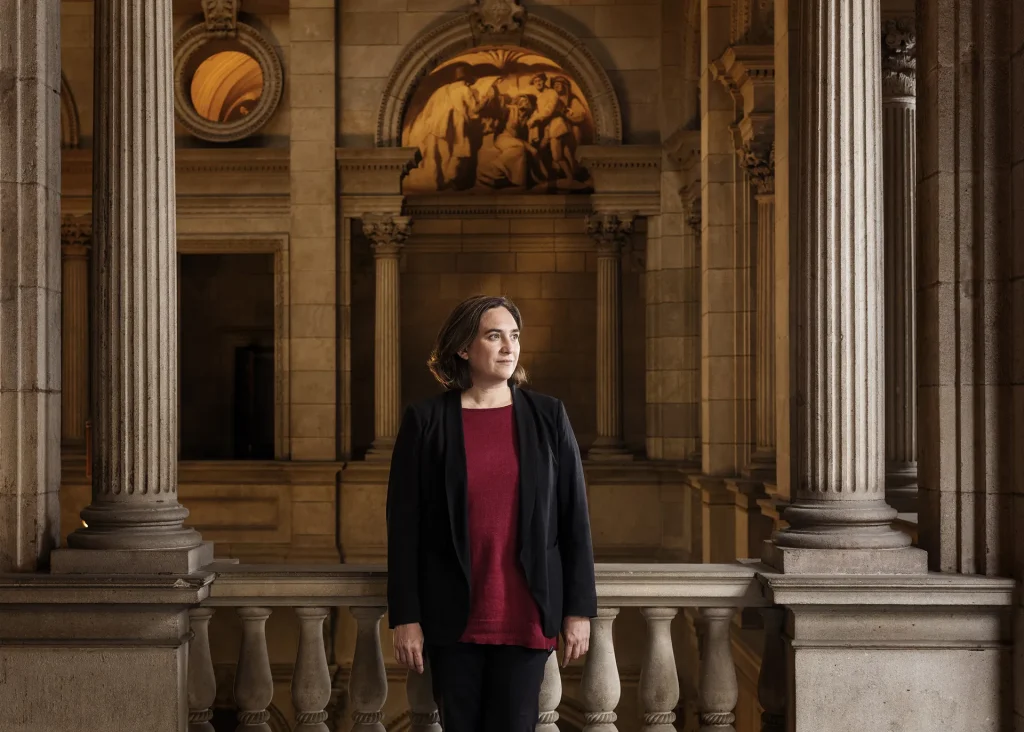
By Masha Gessen, 2018, (In the online New Yorker, 8/6/18)
The municipalist agenda is intentionally broad; it’s based, as Pin puts it, on common goals rather than differences.
As the name makes clear, Barcelona en Comú is focused on the commons. Colau speaks of the importance of public space often and articulately. “Public space is the place, par excellence, for democracy: this space that belongs to all of us,” she told me. “Therefore, this is also the space of the most vulnerable people, which is what democratic systems should prioritize: the people who have fewer opportunities. If you have little private space, you have more public space and public services—libraries, beaches, parks. It is the space to meet with others, but also it’s a space where you can be who you want to be—this is the space for freedom.
And, therefore, it is a space where you can build up the city with others. So, from that point of view, the more public space there is, and the better its quality, the better the quality of the democracy.”
The Wisdom of Our Ancestors
By David Korten.
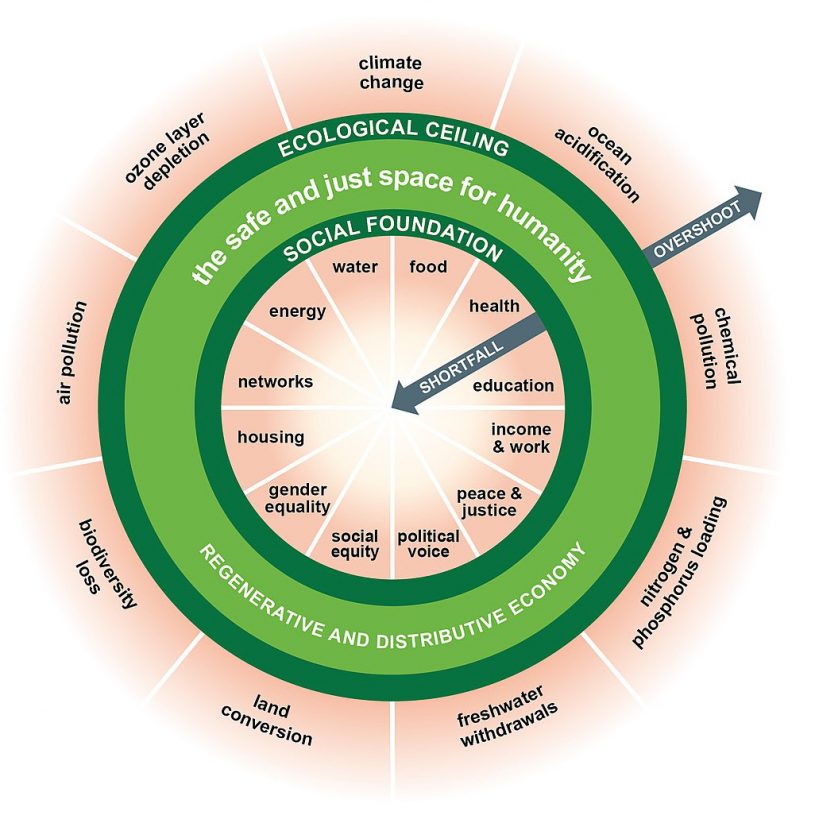
From the surviving early cultures of Africa, the human birthplace, comes a foundational insight into life and our distinctive human nature and responsibility. It goes by different names in different places. It is perhaps best known by non-Africans as ubuntu, which translates: “I am because you are.”
In its fullest meaning, ubuntu acknowledges the individual’s dependence on the whole of life: “I am because we are.” The Ubuntu Principle takes it the next step to its simple, yet profound, implication: “I do best when we all do well.” It leads us from asking, “How can I make a difference?” to “How can we make a difference?”
Deschooling Dialogues: On Initiation, Trauma and Ritual with Francis Weller

Can we get there? Back to community, to connection, art, imagination, mutual engagement? We either heal communally or we don’t. As far as what we’re going through right now, we’re watching the historic trauma unfold, and the reactions to trauma, which are panic, terror, exaggerated expressions of masculinity in its grossest form. And we’re also seeing a heightened and quickened sense of compassion.