No Tree Knows Mystery – Drawing Parallels Between the Life of a Human and a Tree By Michael Ribas
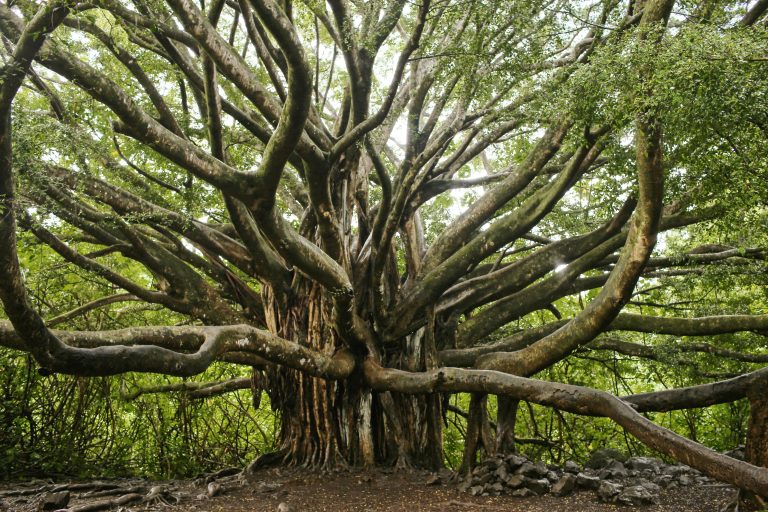
Nature is a marvelous teacher. If you look closely at any part of nature, you will realize there is something to learn from everything, even a tree. The life of a tree has many parallels to the life of a human.
While most of these similarities are physical, there are existential lessons to be learned from the physical as it is how we process and experience life. Let’s take a look at what these words convey.
From the very beginning of a tree’s life, we can see parallels to our own lives. While the processes are different, a seed is planted in the earth much like sperm and ovum are planted in the uterus.
The seed begins to grow in two directions remarkably similar to the zygote which divides and grows through mitosis. The earth is the womb to the seed as the mother is the womb to zygote.
Thus, the beginning of the lesson provided by the tree is that many things in life grow in two directions. We as humans are often taught that light is good and darkness is evil. The tree shows us that this is not the case as by growing down into the earth it nourishes, anchors and stabilizes itself.
Simultaneously, the tree grows up into the atmosphere. Here, we see how the tree seeks sunlight to harness, convert and store its energy. The
message is of maintaining a balance of up and down, dark and light, and that our primary sources of physical existence are the sun and earth.
During birth and youth, the tree is vulnerable much like the humans. It requires a proper environment to grow and flourish like nutrient rich soil, water and sunlight. The tree is shaped by its environment as the wind, soil, rain, rocks, animals and human constructs promote or interfere with its growth.
Young humans too are profoundly influenced by their environment, both physically and emotionally. Humans require atmosphere, water, food, clothing and shelter as well as caregivers to love and teach them.
Again, a parallel, the earth and sun are to the tree what the mother and father are to the child. As the tree transitions from sprout to sapling, it must be strong yet flexible as the elements in nature are at times harsh.
The perils of the adolescent tree are many and include fire, drought, flood, extreme temperature, wind, moss, other plants, insects, animals and humans. These same elements are concerns to young humans as well. Apart from physical, humans have emotional and psychological needs that are ideally provided in a beneficial manner yet many times they are detrimental– much akin to treachery within nature. This parallel is that the beneficial supports and nourishes while the difficult strengthens and prepares us for future challenges.
Throughout its existence the tree grows, blooms, reproduces,
sheds, sometimes goes dormant and
eventually dies just as all physical entities must. Humans
also have seasons in life, and while we do not shed leaves
we do have friends and family that perish (parts of our
family tree).
The physical losses of the tree are much like the physical
losses of humans, yet we have an emotional/psychological
component.
A lesson from the tree shows that while it may
lose all of its leaves and even some branches in the fall – there will soon be new leaves to grow and new branches that will help nourish its growth. Each time we lose a loved one we are given an opportunity to give that love to someone else, someone that needs it and someone that may very well respond in kind.
In life trees behave in response to the seasons. They have means to procreate. They house many other organisms from the microscopic, to insects, reptiles, to birds, primates and in death they even house humans.
They usually live for many years and provide stability and nourishment to topsoil. They provide shade, weather protection, oxygen, sometimes food in life and then in death they provide timber for building, heating and cooking. As we live our lives, we humans have comparable experiences and provide many of the same services to each other as well as to other species whether intentionally or inadvertently.
Another phenomenon that the tree demonstrates well is how life continues uninterrupted even after what appears to be an end.
Consider the tree that provides firewood to cook a meal that a human eats.
In this instance, the life of the tree (its stored
energy) is released to feed the fire which in turn
cooks the food to feed a human who in turn has a
child that plants a tree. Thus the tree shows us how
there is no beginning, and no end to life. Life is a
cycle that does not judge or condemn or expect
anything. It just is.
There are many lessons here as the tree does not
begrudge or charge the insects and animals that
take residence, sustenance or proximity to it. The tree gives much while taking only what it requires from the earth and the sun.
It grows up into the light, and it grows down into darkness. All it has to give, it offers unconditionally without expectations and regrets.
Adapted from: FractalEnlightenment.com